Why clinic cooling needs a different plan
A clinic is not the same as a home or a shop. People sit for long periods, doors open often, and some rooms need steady temperatures more than strong airflow. Waiting rooms can become stuffy very quickly, while consultation rooms need quiet operation and even cooling so patients stay comfortable during short appointments or longer procedures.
In Johannesburg North, Sandton, Randburg and Midrand we often see clinics dealing with hot reception areas, one room over cooling while the next room stays warm, or units that struggle when load shedding ends and the power comes back on. For medical spaces, the equipment needs to be sized and placed properly, then serviced on time so dust and blocked filters dont build up. A unit that is too small will run all day and still miss the set point, while an oversized unit can short cycle and leave the room damp and uncomfortable.
Our approach is simple: look at the room use, how many people sit there, how often doors are opened, how much glass faces the sun, and whether the clinic runs from early morning to late afternoon. That gives a better answer than guessing by floor size alone.
Typical clinic equipment that works well
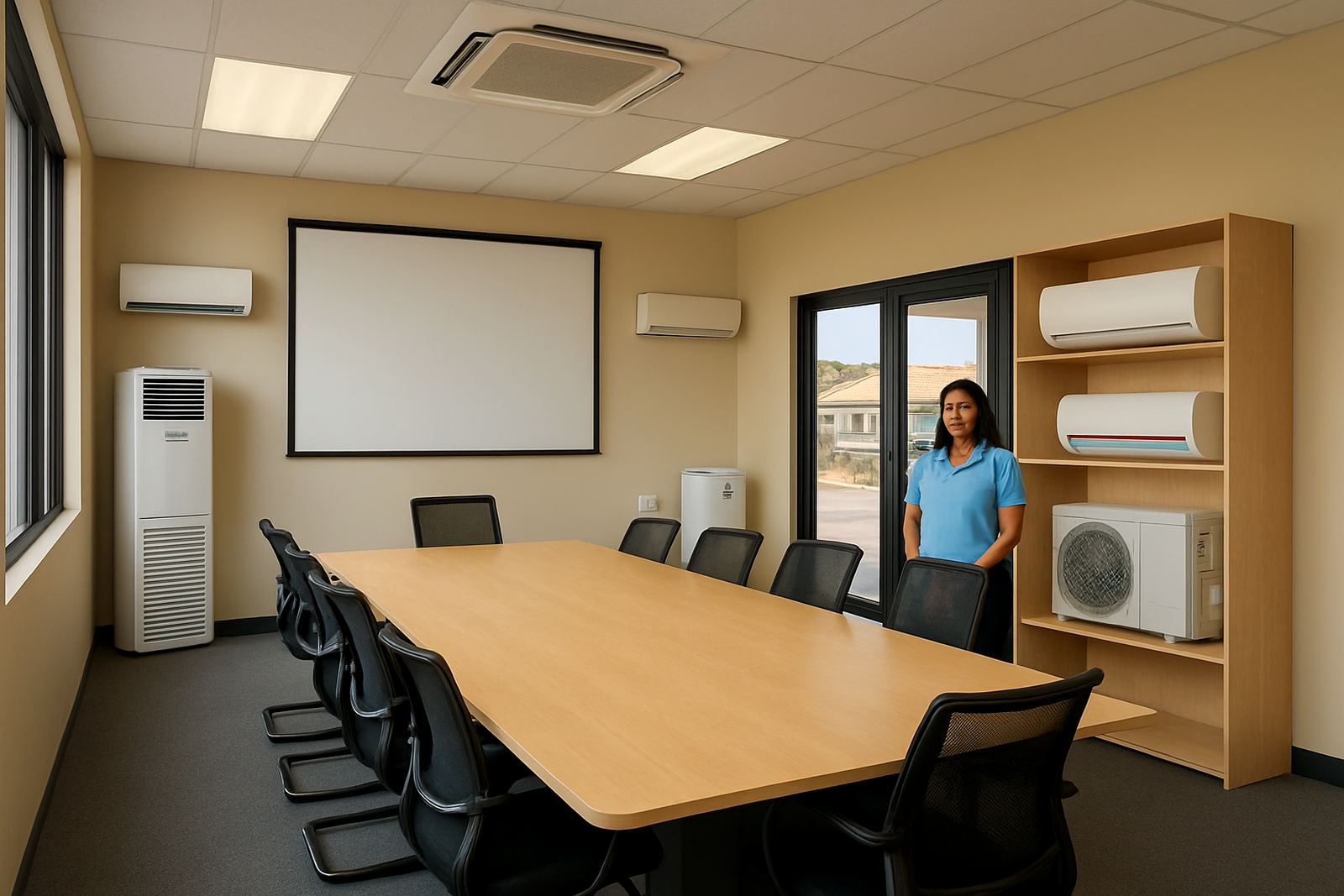
Most clinics use split aircons for individual rooms and inverter units where quiet running and lower power use matter. For larger reception areas or open-plan admin spaces, multiple wall-mounted units or a small multi-room setup may be more practical. In some cases a heat pump is added for domestic hot water, especially where handwashing demand is high and you want lower running costs over time.
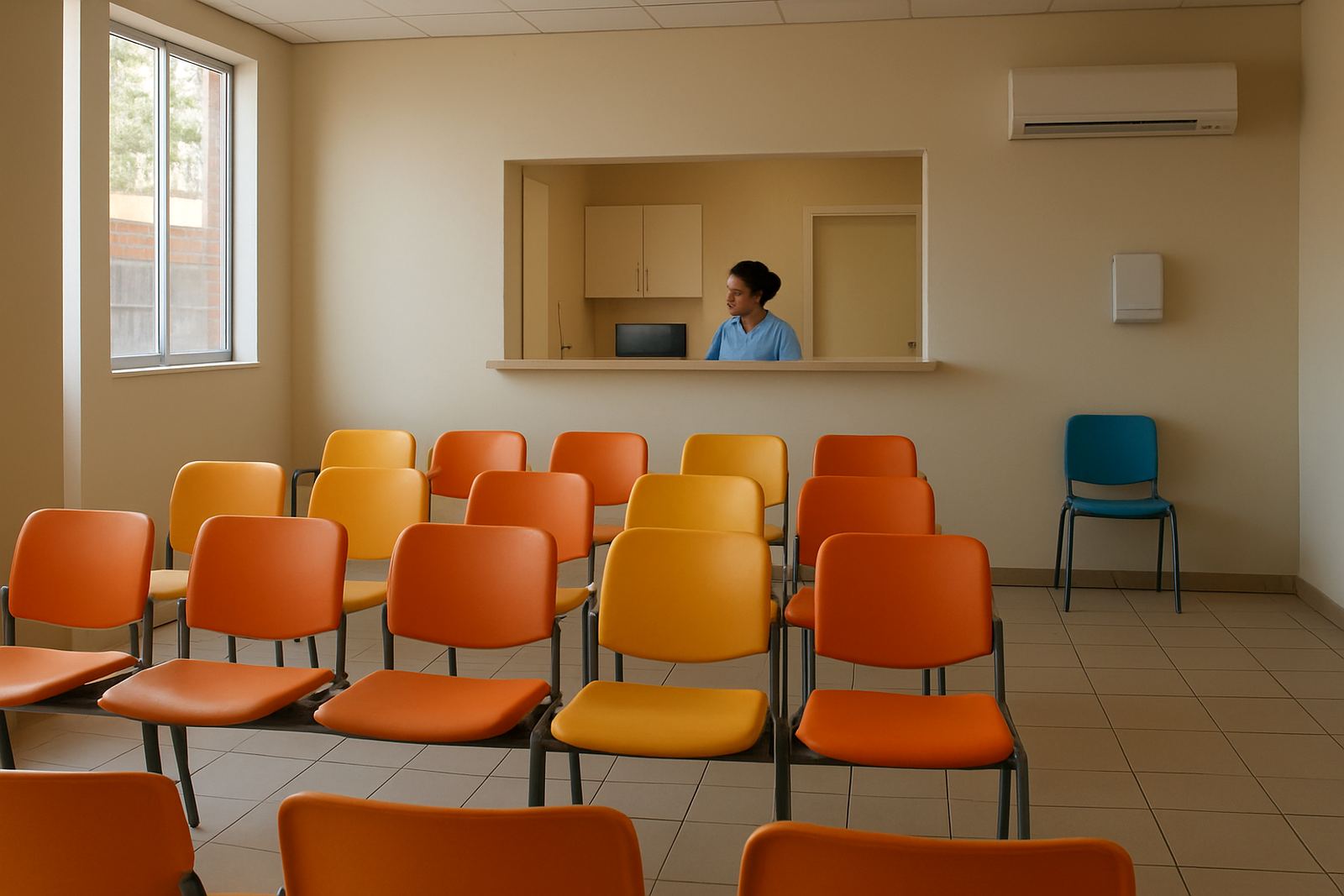
- Waiting rooms: one or two wall-mounted split units, usually 18 000 BTU to 24 000 BTU depending on size and glass area.
- Consultation rooms: quieter 9 000 BTU to 12 000 BTU units for single rooms, or 18 000 BTU where the room is larger or has more equipment.
- Treatment rooms: inverter units with stable temperature control and careful discharge direction so patients are not sitting in direct airflow.
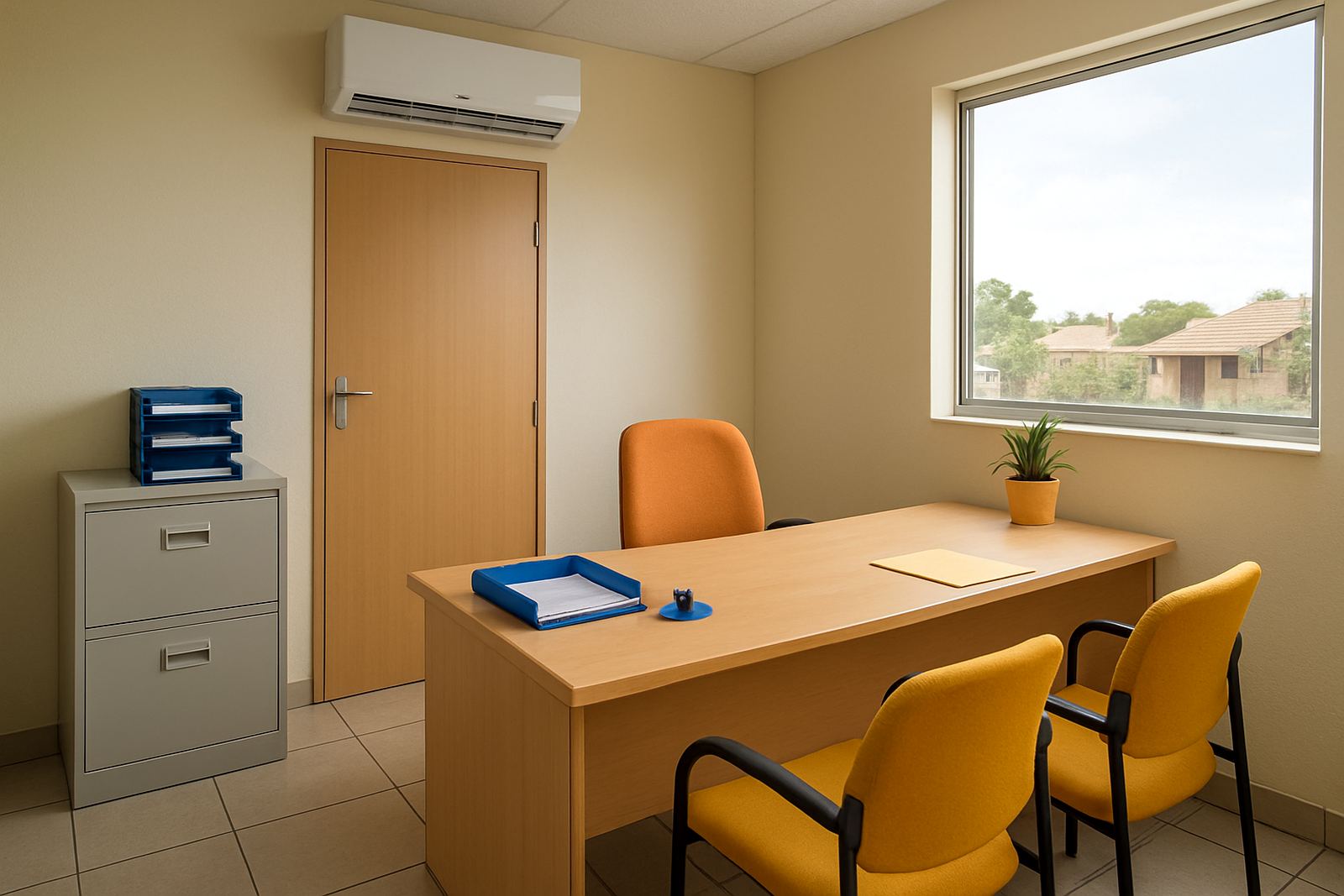
- Reception and admin areas: sized for foot traffic, printers, computers and open doors, not just square metres.
For clinics in coastal humidity or older buildings with limited insulation, we also look at dehumidification and drainage. Condensate must drain properly and not drip across walkways or into sterile areas. If the clinic is in a townhouse conversion or a retail unit in Sandton or Randburg, the outdoor placement needs to respect body corporate rules and municipal limits on noise and visible pipework.
Planning the layout so each room stays usable
The best clinic aircon layout starts with the room flow. A waiting room with three side rooms opening off it should not rely on one unit blasting cold air across the whole space. Likewise, a corridor unit rarely solves overheating in enclosed consultation rooms. We map the rooms, note doors, windows, ceiling height and the direction of afternoon sun, then decide where each indoor unit should sit.
In practice, the aim is to avoid direct draft on chairs, beds or examination tables. Air should move across the room and mix gently, not hit people in the face. Outdoor units are placed where they can get air flow, where service access is possible, and where they will not become a nuisance to neighbours or patients. In some office park clinics in Midrand and the East Rand, that means planning for roof clearance, long pipe runs or shared service areas before the installation day.
- Keep waiting rooms on a separate control zone where possible.
- Use quiet units for consultation and treatment rooms.
- Allow access for filter cleaning and servicing without moving furniture each time.
- Check for backup power if the clinic cannot stop during outages.
Good planning also includes after-hours use. Some clinics only need daytime cooling, but others handle emergencies or extended hours. That changes the equipment choice and the service schedule.
Common mistakes we see in clinics
One common mistake is fitting too little capacity and hoping the room will be fine because it is not very large. A packed waiting room on a hot day can push a small unit well past its limit. Another is choosing the cheapest option and then finding the noise level is too high for consultation rooms where patients need calm. A third mistake is poor drainage or pipe routing, which can cause leaks, stains or unpleasant smells near treatment areas.
We also see clinics where the aircons are installed without thinking about maintenance. Filters become blocked by dust, paper fibres and general traffic dirt, then airflow drops and the unit works harder. That is expensive and avoidable. In a medical setting, staff should be able to see when filters need attention and have a proper service plan in place.
Power interruptions are another issue across Gauteng. When the electricity trips and comes back, older units can struggle if they are not protected or correctly restarted. Inverter systems handle this better, but the whole setup still needs proper isolation, cabling and commissioning. If the clinic runs critical equipment, speak to us early so the aircon choice fits the electrical supply and backup arrangement.
What supply and fit usually costs in Rand
Clinic pricing depends on room size, number of units, piping distance, access for installation and whether the space already has electrical points in place. As a working guide, a small single-room aircon supply and fit may start from about R8 500 to R13 500. A better inverter unit for a consultation room or quiet office can sit around R12 000 to R18 000 fitted, depending on capacity and site conditions.
For a multi-room clinic with waiting area, reception and several consulting rooms, budgets can move into the R35 000 to R90 000 range fairly quickly. Larger fitouts, longer pipe runs, ceiling work, heavy-duty brackets or special access can take it higher. Heat pump installations for water heating are priced separately and are usually quoted after a site check, because cylinder size, roof space and plumbing layout matter.
We also quote for servicing and maintenance plans. For clinics this is worth doing, because a failed unit in summer is not just an inconvenience, it can affect patient comfort and staff output. Annual service costs are usually modest compared with emergency repairs and lost time.
How we handle clinic installations across Gauteng
We work from Johannesburg North and cover Sandton, Randburg, Midrand, the East Rand and the West Rand. Thabo Mokoena oversees the business, with Naledi Khumalo handling sales, Pieter van Rensburg supervising installations, Ayesha Patel coordinating service, Sibusiso Dlamini leading technical support and Lerato Molefe handling heat pump work. That means your project is handled by people who know the day-to-day realities of busy premises, not just the product box.
For clinics, we start with a commercial site survey, then provide a clear recommendation for each room. If you are replacing old units, we can remove the existing equipment, check pipe condition and advise whether the wiring and drainage should be reused or changed. If you are fitting out a new practice, we can sequence the work to reduce disruption so reception and consultation rooms stay usable where possible.
We keep the job practical: correct size, neat install, proper commissioning and service support after the fit. That is the part that matters once the clinic is open and patients are walking in every hour.