When a small IT room becomes a big business risk
Many server rooms in Gauteng start as a spare room, store room or a section of an office pass-through. Then the equipment grows: a rack cabinet, a patch panel, firewall gear, a small UPS, maybe a VoIP system and network switches. The problem is that the heat load keeps climbing while the room often has one normal split unit, poor ventilation, or no proper standby arrangement.
For offices in Johannesburg North and Sandton, the risk is not only summer heat. Load-shedding, power returns, dusty air in some industrial areas, and doors opening throughout the day all affect room temperature. Heat-sensitive equipment needs steady conditions, not a unit that only works when someone remembers to switch it on. If the space is running hot now, it usually gets worse once more equipment is added.
- Typical warning signs: warm rack doors, equipment fans running hard, frequent reboots, and high indoor humidity after storms.
- Rooms with no ceiling return air, no louvered transfer, or blocked condensers usually struggle first.
- If the room shares air with a busy office, the load changes through the day and needs proper planning.
Typical equipment found in a server or communications room
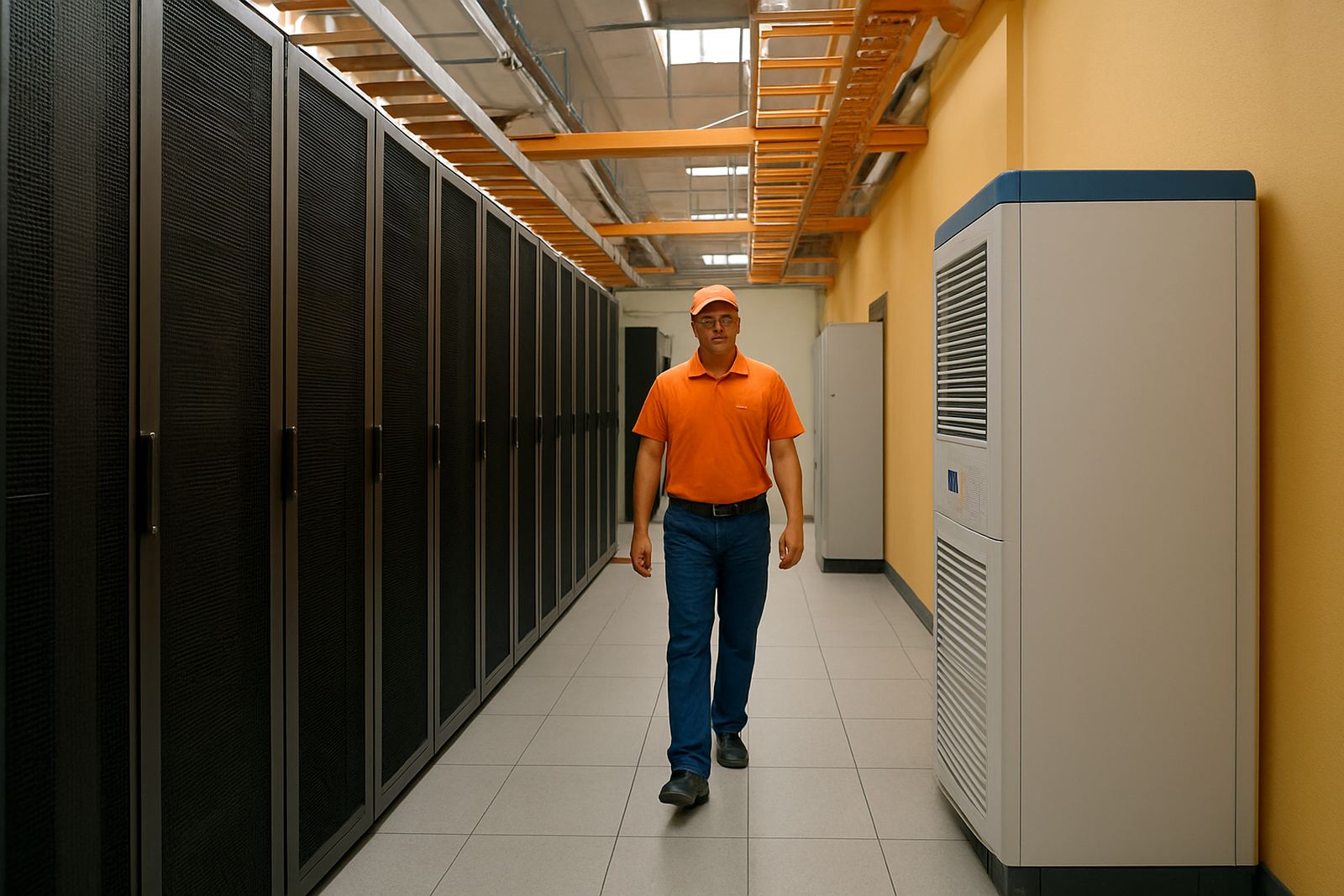
Every site is different, but the usual setup includes network switches, routers, patch panels, wireless controllers, CCTV recorders, a small UPS, access control panels and sometimes a blade or tower server. Some rooms also house telecoms gear, fibre termination, alarm panels and printer servers. Even a modest room can put out far more heat than people expect.
The cooling choice depends on the equipment mix and the room layout. A single wall-mounted split system may work for a light communications room, but a busier IT room often needs better air distribution and a plan for continuous duty. In some cases, two smaller units are better than one larger unit, because the room still gets cooling if one unit needs attention.
- Small comms cupboard: often 2.6 kW to 3.5 kW cooling, depending on equipment density and room size.
- Medium server room: commonly 5 kW to 7.1 kW, sometimes with duty rotation or backup cooling.
- Heavier IT space: may need 9 kW and above, or multiple units with proper controls.
How to plan the layout before you buy any unit
A server room cools best when the airflow is thought through from the start. Hot exhaust air must leave the racks, and cooler air must return to the front of the equipment. If the cold air blows straight into a corner or hits a closed cabinet door, you waste electricity and still get hot spots. A good layout is more important than chasing the biggest machine on the list.
We normally look at the room size, the number of racks, ceiling height, wall exposure, and where the door opens. In offices in Randburg and Midrand, we also check whether the room gets afternoon sun or sits near a kitchen, copy area or UPS battery bank. Those extra heat sources matter. If the room has limited wall space, a high-wall unit may not be practical and a different arrangement can work better.
For more stable operation, the installation should allow service access to filters, indoor coils and drainage. A room packed wall to wall with cabinets and no maintenance clearance is difficult to keep cool and expensive to fix later.
Common mistakes that cause overheating and downtime
One of the biggest mistakes is installing an ordinary office aircon and assuming it can handle server duty forever. Another is ignoring what happens during load-shedding and when power comes back. Short cycling, dirty filters, poor drain fall and badly placed sensors all make the system less reliable. If the drainage is not right, water can drip near live equipment, and that is a costly problem.
We also see rooms where the supply air is blocked by a cabinet or the condenser sits in a hot enclosed yard with little clearance. On some sites, the outdoor unit gets baked by reflected heat from a wall or roof sheet. In coastal areas this is worse because humidity and corrosion add extra stress, though Johannesburg has its own dust and summer storm issues too.
- Do not underestimate the heat from UPS units and battery charging.
- Do not leave cables, cartons or spare boxes in front of return air paths.
- Do not treat a server room like a normal office, because the operating hours are different.
Cooling options for continuous operation
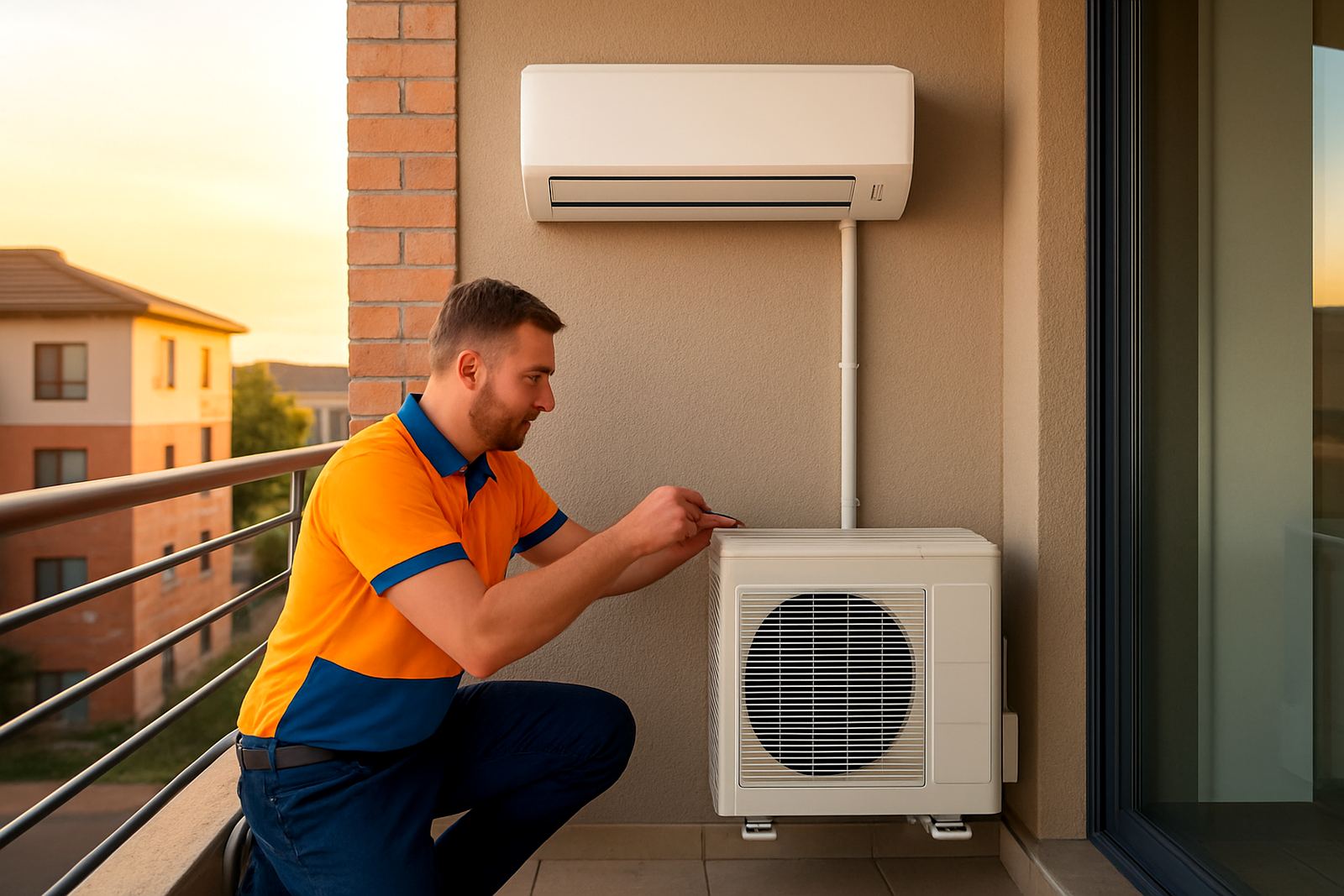
For many Johannesburg clients, the best solution is a properly sized inverter split system with careful placement and an agreed maintenance plan. In some rooms, a standard split is enough if the equipment load is light and the room is used sensibly. Where the room must stay online for long hours, inverter control helps reduce temperature swings and saves power compared with older fixed-speed units.
For sites with tighter uptime needs, we can look at twin-unit setups, duty rotation, or a backup arrangement so one unit can carry the room while the other is serviced. Solar aircon can also assist in certain buildings where daytime cooling demand is high and roof or inverter capacity is already in place. For a few specialist rooms, the planning may include ventilation improvements, not just a bigger air conditioner.
Heat-sensitive rooms need more than a quotation. They need a proper discussion about room use, access for maintenance, and what happens during power interruptions. That is where supply-and-fit planning saves money later, because the system is matched to the real load instead of guessed from floor size alone.
Budget ranges in Rand for Gauteng sites
Budgets vary a lot depending on size, access and whether any electrical upgrades are needed. A small comms cupboard with a basic split installation may start from around R15 000 to R25 000. A medium server room with a better inverter unit, ducting or extra controls can sit in the R25 000 to R55 000 range. Larger rooms, twin systems or higher specification equipment can move from R55 000 upwards quickly.
If you are replacing an old unit, reusing pipework is sometimes possible but only if it is clean, pressure tested and suitable for the new system. That can lower cost, but it must be checked properly. Service plans, drain cleaning and seasonal inspections are worth including too. A modest maintenance plan is far cheaper than a server outage on a Monday morning.
For offices in Sandton, Midrand and the East Rand, we usually recommend quoting the whole job, not only the box on the wall. That includes installation, commissioning, safe drainage and a discussion on after-hours support where needed. It gives a more honest total and avoids surprises later on.