Why a full meeting room feels hotter than the thermostat says
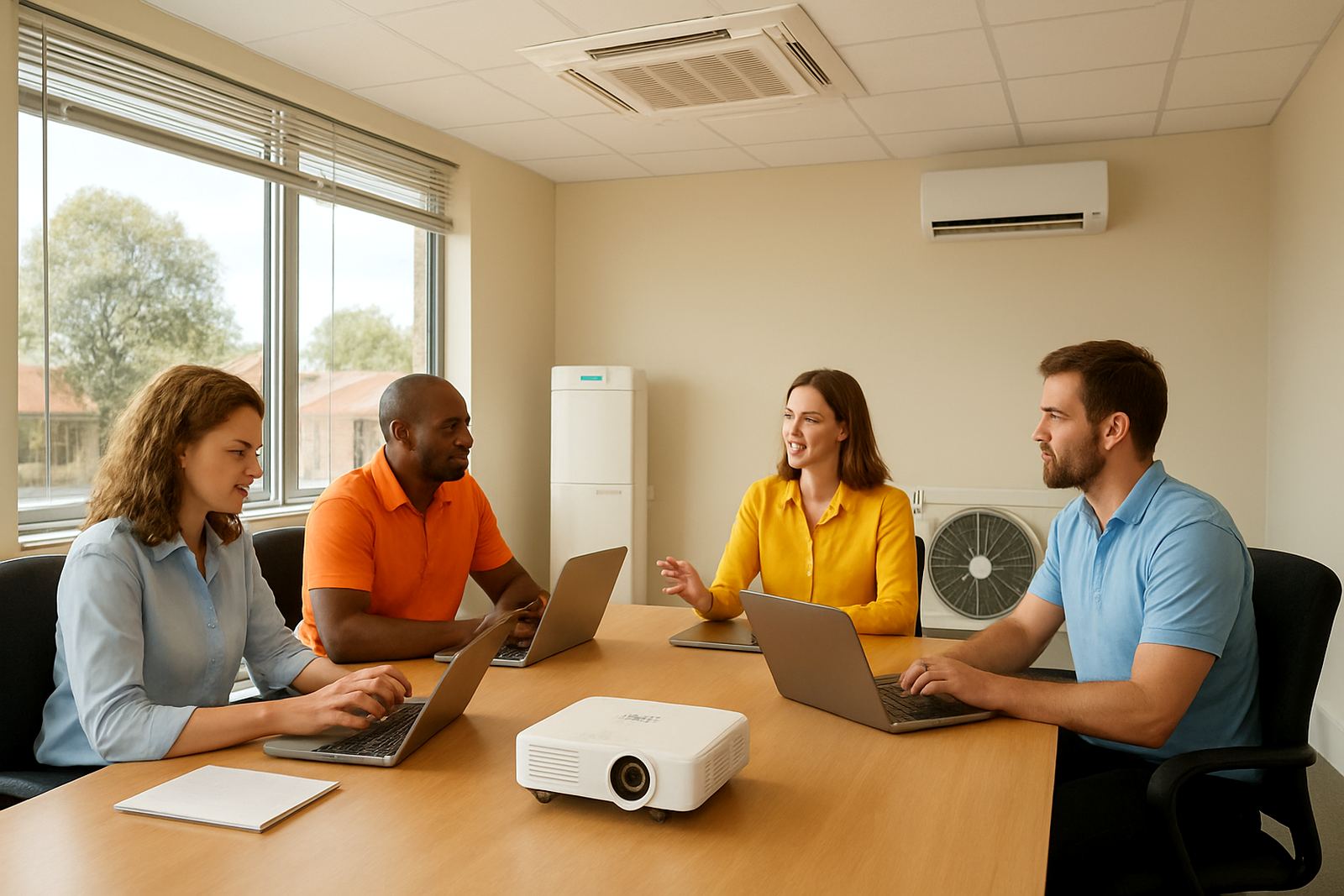
A boardroom can feel stuffy within minutes because every person in the room gives off heat and moisture. Add a projector, multiple laptops, a screen wall, and a room with glass on the western side, and the temperature climbs far quicker than most people expect.
In Johannesburg North and Sandton, we often see meeting rooms that are fine at 8am but uncomfortable by 10am once the sun moves and the room fills up. The issue is not only temperature. Stale air, high humidity and poor circulation make people feel tired, irritable and distracted. That is why a boardroom needs more than a basic bedroom-size unit hung on the wall.
The common causes of hot spots in office meeting rooms
Hot spots happen when cooled air never reaches the whole room evenly. A unit that is too small works flat out and still cannot keep up. A unit that is too big can short cycle, which means it cools quickly and then shuts off before it has removed enough moisture. Both problems leave the room feeling uneven.
Placement matters just as much as size. If the indoor unit blows directly at one side of the table, the people nearest it get cold while the other side stays warm. If the return air path is blocked by a partition, long curtains or built in joinery, the system keeps recirculating the same air. In busy offices from Randburg to Midrand, that is often the real reason a meeting room never feels right.
- Too little cooling capacity for the room size
- Direct sun through unshaded glass
- Too many people in a sealed room
- Poor air distribution because of bad unit placement
- No regular servicing, so airflow drops over time
How to size a boardroom aircon properly
The right size depends on room volume, sun exposure, occupancy and equipment load. A 20 square metre boardroom with six people is very different from the same room with fourteen people and a conferencing screen running all morning. In many cases, a site survey is the only way to avoid guesswork.
As a practical guide, we first look at floor area, ceiling height, window size and how long the room is occupied. A room with full morning meetings in Bryanston may need a different answer to a lightly used boardroom in an East Rand office park. If the room is shared for training sessions or hybrid meetings, we also check whether the cooling must handle peak occupancy for hours at a time.
For offices, inverter units are often a better choice than old fixed-speed models because they hold temperature more steadily and use power more efficiently. That matters on hot days and it also helps when load-shedding returns and the room has to recover quickly after power comes back on.
Placement, airflow and the shape of the room
The best cooling plan follows the shape of the room, not just the nearest wall. In a long narrow boardroom, one unit at the short end may not spread air evenly. In a square room with a large table in the middle, it may be better to position the unit so air travels over the table and along the room, instead of blasting directly at the chair closest to the unit.
We also look at doors and opening patterns. A meeting room that opens every few minutes to a corridor loses cooled air fast. If the room has glass doors or a west-facing window, we may suggest tinting, blinds or solar control film to reduce heat gain before the aircon even starts working.
- Keep supply air moving across the occupied zone, not into one seat
- Do not block the indoor unit with cabinets or bulkheads
- Seal obvious air leaks around doors and ceiling voids
- Use blinds or heat-reducing film on strong sun-facing glass
- Check that the condensate drain falls correctly so there are no water marks later
Power cuts, inverter use and boardroom comfort in Gauteng
Boardrooms are often the first place staff notice a cooling problem during load-shedding. When the room fills up and the power is patchy, a standard setup can take too long to recover. Inverter air conditioners are useful because they start more gently and can hold a steadier temperature once power is restored.
For offices using backup power, we check what the system can actually carry. An aircon may be efficient, but if the backup supply is undersized, it will still trip when the room is busy. That is why we look at the whole load, not only the aircon. If the meeting room must stay usable during outages, we can also advise on solar aircon options or a more sensible split between cooling and other essential office loads.
Humidity also matters in Gauteng summers. A room may not feel extremely hot, yet people still complain because the air is heavy. The right system removes moisture properly so the room feels cooler at a normal setting, rather than forcing everyone to sit in a cold draught.
When a boardroom needs service, not replacement
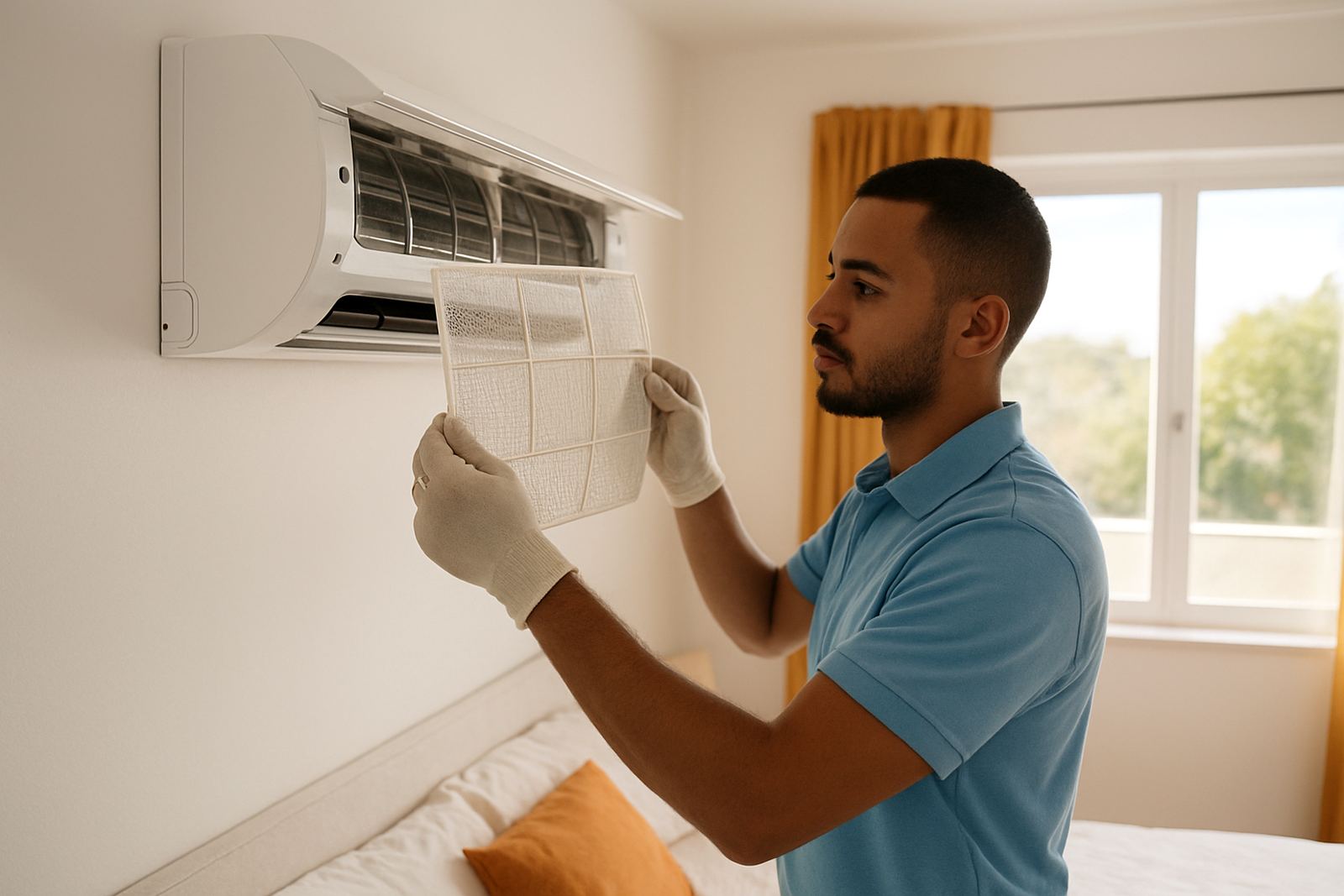
Some rooms are blamed for being too small or badly designed when the real issue is a dirty filter, blocked coil or low refrigerant charge. If the unit has not been serviced in a year, airflow can drop enough to affect the whole meeting. That is especially common in offices with dust from nearby roads or building work.
Signs that service is due are usually easy to spot:
- Airflow feels weak even on a high fan setting
- The room cools slowly and never quite settles
- There is dripping, smell or water staining near the unit
- The outdoor unit runs loudly or cycles on and off too often
- People keep asking for the temperature to be lowered, but nobody is comfortable
A proper maintenance plan helps keep the room ready for client meetings and monthly management sessions. It also reduces the chance of sudden breakdowns during the first hot spell of summer.
A Johannesburg example that shows the difference
We recently helped a medium sized office in Johannesburg North where the boardroom had become a problem room. Staff complained that the far end was warm while the nearest seats were cold. The room had a large glass wall, a projector, and regular meetings with ten to twelve people. The unit fitted years earlier was working, but it was never really matched to the room.
After a site survey, we replaced the old setup with a properly sized inverter solution, improved the unit position and recommended better window shading. The result was simple: fewer temperature arguments, less noise during meetings and a room that stayed comfortable through long sessions. That kind of fix is usually more practical than trying to force one small unit to do the job of a larger, better planned system.
For boardrooms across Sandton, Randburg, Midrand and the wider Gauteng area, the best cooling answer is usually the one chosen after a proper look at the room, not from guesswork. That is where supply and fit, servicing and honest advice save time and money.