What Each Type Does Best
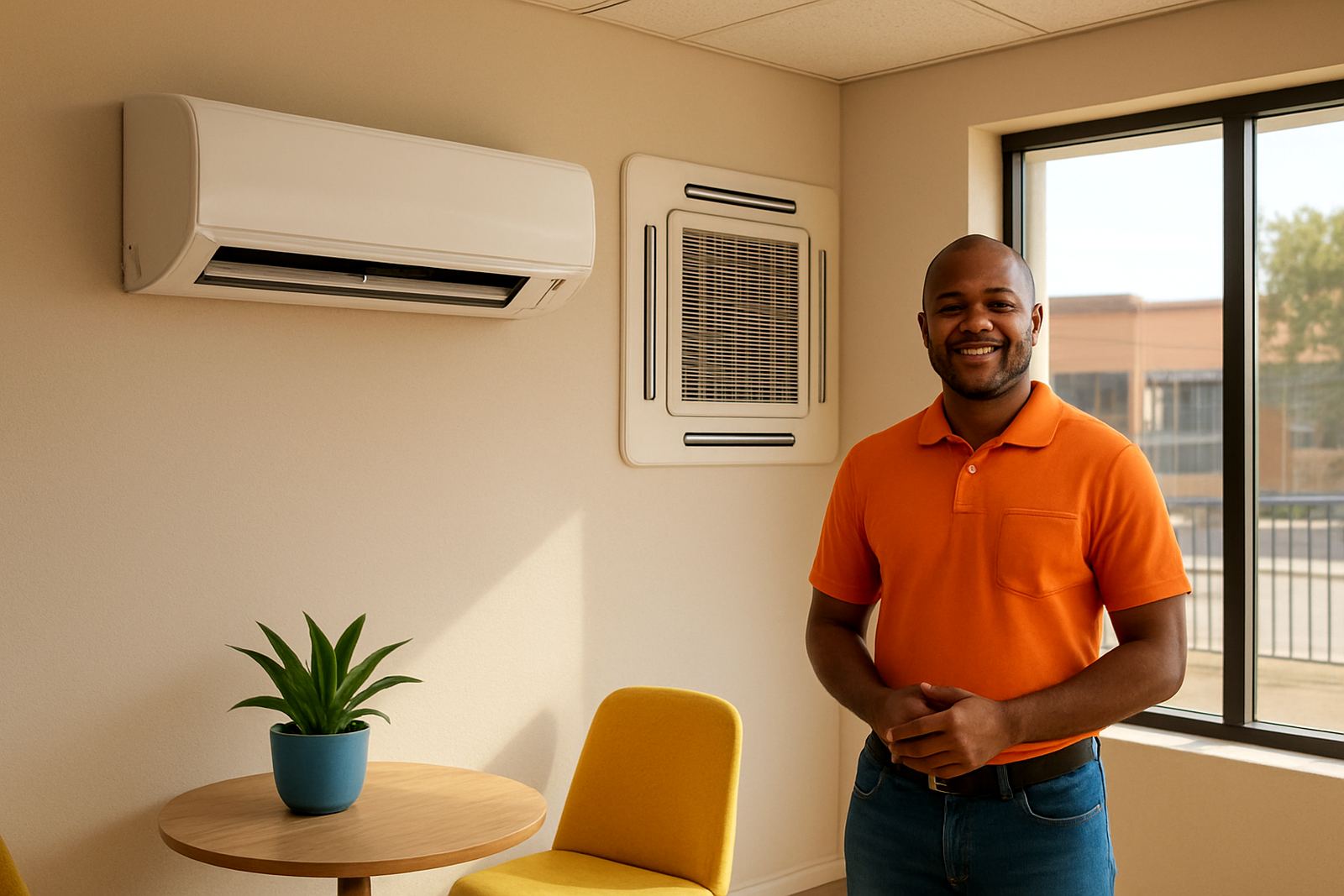
A wall-mounted split unit is fitted high on one wall and pushes air across the room in a focused stream. It works well in bedrooms, small offices, lounges and shopfronts where the room has a clear wall and you want direct cooling or heating without major building work.
A cassette unit is recessed into a ceiling and spreads air in several directions. It suits open-plan offices, boardrooms, clinics and retail areas where you want more even coverage and a cleaner wall finish. In many cases a cassette gives better circulation in larger square rooms, while a wall unit is simpler and easier to place in smaller spaces.
If you are comparing the two, start by looking at the shape of the room, the ceiling height and where people sit or work. A unit can only perform properly if the air has room to move, so placement matters as much as capacity.
When a Wall Unit Makes More Sense
Wall units are often the better choice for homes in Randburg, Sandton or Midrand where you want lower installation cost and quicker fitting. They are also practical for homes with normal ceilings, limited roof access or plasterboard ceilings that should not be cut open.
For a bedroom, study or small boardroom, a wall unit can be placed to avoid blowing directly onto people. That helps with sleep, concentration and less dry air. If the room has a simple layout and the door stays closed most of the day, a wall unit can cool fast and keep power use under control.
- Best for smaller rooms and private spaces
- Lower initial installation cost than most cassette setups
- Easier to service without opening the ceiling
- Useful where wall space is available and clear
Wall units are also a practical option during phased upgrades. If you are replacing an older aircon in stages, a wall model can be installed with less disruption to the property.
When a Cassette Unit Is the Better Fit
Cassette aircons suit rooms where people are spread out and air needs to reach several points at once. This is common in open-plan offices in Johannesburg North, waiting rooms, training rooms and larger living areas with a central ceiling void.
Because the indoor section sits in the ceiling, a cassette keeps walls free for shelves, screens, cupboards and décor. It also helps where direct wall blow is a problem, such as over counters, reception counters or meeting tables. In many commercial sites, that even distribution makes the space more comfortable for staff and clients.
There are limits though. A cassette needs suitable ceiling depth, safe access for service and enough space above the ceiling for drainage and pipe work. If the ceiling is too shallow, the unit may not be practical without changes to the structure.
- Best for open-plan areas and shared workspaces
- Helps avoid clutter on walls
- Spreads air more evenly across larger rooms
- Needs ceiling access for installation and servicing
Room Checklist Before You Choose
Before you buy, measure the room properly and note how the space is used during the day. A quick site check can prevent the wrong size or the wrong type being fitted. In Gauteng, we also look at insulation, sun exposure and whether the room must keep running during load-shedding with backup power.
Use this checklist:
- Room size in square metres
- Ceiling height and ceiling type
- Number of people in the room at peak times
- Heat from windows, equipment or direct sun
- Whether the room is for home, retail or office use
- Access for pipe runs, drainage and maintenance
- Backup power or solar supply available
If the room faces strong afternoon sun or has many computers and appliances, you may need more cooling than a plain room of the same size. That is why the site survey matters. A correctly sized unit will run more efficiently and less often, which helps on electricity costs.
Installation, Power Use and Ongoing Care
Both styles need proper installation if you want reliable performance. A wall unit needs sound wall support, correct drainage and a clean route for the copper piping. A cassette needs careful ceiling cutting, secure suspension and enough access for future servicing. Poor fitment can lead to water leaks, noise and weak cooling, which is expensive to fix later.
For energy use, inverter models are usually worth considering because they adjust output instead of switching hard on and off. This can be useful in homes and offices where the aircon runs for long periods. If you have solar or backup batteries, the unit choice should be matched to available power so you do not trip the system when demand rises.
Regular servicing also matters. Dust build-up, blocked filters and poor drainage affect both cassette and wall units. In coastal humidity or dusty suburban areas, a service plan can help keep the system working cleanly through summer and winter.
Simple Decision Guide for Buyers
If you are still unsure, use this quick rule. Choose a wall unit when the room is smaller, the budget is tighter and the wall position is easy. Choose a cassette when the space is open-plan, people are spread out and you want the unit off the wall and into the ceiling.
For homes, the wall unit is often the first pick. For offices, clinics and larger commercial spaces, a cassette is often the better long-term choice. In some buildings, the answer is a mix of both. A reception area may suit a cassette while private offices use wall units.
At Airconditioning Superstore in Johannesburg North, we handle supply and fit for both options across Johannesburg, Sandton, Randburg, Midrand, the East Rand and the West Rand. We also advise on replacements, relocations and maintenance plans so the system fits the room and the way you use it.