Dining room cooling that does not disturb guests
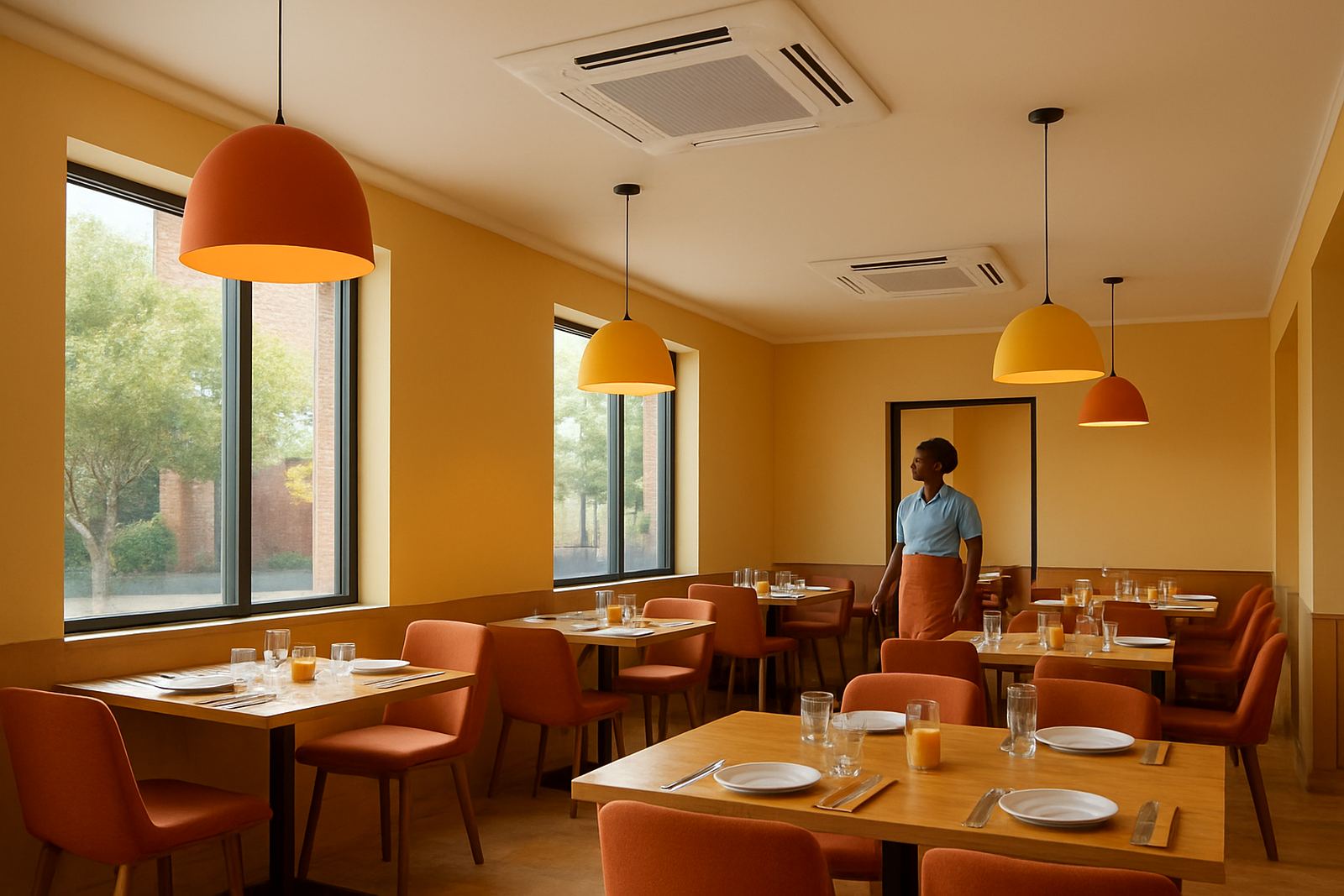
In a restaurant, the goal is even comfort. Guests should feel cool enough to stay relaxed, but not get a stream of air across the back of the neck while eating. That is why restaurant aircons are planned around seating positions, walkways, windows and the kitchen pass, not just floor size.
We look at how the room is used at different times of day. A breakfast café in Sandton may need quick pull-down cooling for a sunny front window, while a dinner venue in Randburg may need quieter operation and steadier temperatures through the evening. For a 40 seater room we normally split the load across more than one indoor unit so the airflow stays gentle and the room remains more balanced.
Typical equipment set for restaurants and cafés
Most restaurant jobs use wall-mounted split systems or inverter systems for the dining area, with outdoor units placed where they do not affect customers or neighbours. Larger rooms, long layouts and open-plan venues may need multiple indoor units on separate circuits so one section can still run if another is switched off. In some sites, cassette units or slim ducted units work better where the ceiling height allows it.
- Split aircons for small dining rooms, private rooms and offices
- Inverter aircons for quieter running and lower power draw
- Multi-unit layouts for long restaurant floors and open seating areas
- Wall-mounted or ceiling-mounted indoor units, depending on headroom
- Dedicated units for waiting areas, bars and function rooms
When the venue also runs a takeaway counter or private function space, we can separate the cooling zones so each area is controlled on its own. That helps with electricity use and gives staff better control during busy service.
Layout planning for tables, doors and kitchen heat
Restaurant aircon performance depends heavily on placement. A good system can still feel wrong if it blows across the doorway, sits too close to the kitchen heat or ends up facing a table where guests sit for long periods. We measure the room and check the position of windows, extractor fans, glass fronts and service doors before recommending equipment.
In Johannesburg North and Midrand, many restaurants have large glass areas that gain heat during the day. In those spaces we may recommend a stronger first unit near the front and a second unit further back so the room cools evenly. Where the ceiling is high or the floor plan is narrow, we plan the throw of the air carefully so one side of the room does not get cold while the other side stays warm.
- Keep indoor units away from direct table seating
- Avoid blowing across entrances and tills
- Allow space for cleaning filters and service access
- Separate dining areas from kitchen heat where possible
What goes wrong when restaurants pick the wrong system
The most common mistake is buying one unit that is too small for the room. It may run all day, struggle in peak heat and leave the dining area uneven. Another common problem is oversizing. If the unit is too large it cools too fast, short cycles, and does not remove enough humidity. That can leave the room feeling clammy instead of comfortable.
Restaurants also run into problems when the installer ignores noise, drain falls or external unit position. A loud indoor unit can spoil a quiet meal, and poor drainage can drip onto paving or outdoor seating. On coastal humidity is less of a concern in Gauteng, but blocked drains and dirty filters still cause bad smells and weak airflow. Regular servicing matters, especially in restaurants that cook with oil and open grills.
We also see power problems on older sites where the electrical supply was never planned for airconditioning. If the unit trips the circuit when the coffee machine, fridge and extractor are on, the room loses comfort at the worst time.
Budget ranges for restaurant aircons in Rand
Costs vary by room size, number of seating areas and how far the pipe runs need to go. A small restaurant or café can often be fitted from about R18 000 to R35 000 for a single quality split system, depending on the model and installation conditions. A medium dining room with two to three indoor units usually falls between R38 000 and R85 000. Larger venues, private function rooms or long open-plan floors can move well above that if multiple units and longer pipe runs are needed.
We also quote for replacements, relocations and service work. A straight change-over is usually cheaper than a new install, but if the old pipework, drainage or isolator points are tired, it is often worth doing the work properly once rather than paying for repeat call-outs later. We give practical options so you can see where to save and where not to cut corners.
Supply, fit and service across Johannesburg and Gauteng
Airconditioning Superstore works with restaurant owners, franchise managers and independent operators across Johannesburg North, Sandton, Randburg, Midrand, East Rand and West Rand. Our team handles supply and fit, aircon replacements, relocations, servicing and repairs, plus maintenance plans for venues that need regular attention.
Thabo Mokoena and the team can also assist with commercial site surveys before a new fit-out or refurbishment. That helps when you are adding seating, changing the kitchen layout or trying to keep the dining room comfortable during load-shedding with a generator or backup power setup. If you need restaurant aircons that suit the room rather than overpower it, we can assess the site and give a proper recommendation.
- Restaurant dining rooms and private function areas
- Cafés, bistros and takeaway seating areas
- Front-of-house offices and manager rooms
- Regular maintenance plans for busy trade