Guest room comfort without spoiling the building
The client was a hospitality property in Fourways, Johannesburg, with a mix of guest rooms that needed consistent cooling and heating across the year. The brief was simple on paper but careful in practice: each room had to feel comfortable for overnight guests, the system had to run quietly, and the installation could not interfere with the finish of the walls, ceilings and external façade. In a lodge setting, appearance matters. Guests notice noisy fans, visible pipe runs, and outdoor units placed where they dominate the courtyard or garden.
We planned the job around the use of each room, the orientation of the building and the existing electrical layout. Rooms that caught afternoon sun needed slightly different sizing to shaded rooms. We also had to work around occupancy times because the property could not shut down for a full strip out. That meant a staged approach, with clear room access, tidy working methods and daily cleanup. The lodge wanted practical climate control, not a complicated setup that would need constant attention from staff.
What we supplied for the installation
We supplied a set of wall mounted split units selected for guest room use, with inverter technology where appropriate so the rooms could hold temperature more steadily and use less power during long running periods. The property also needed units that could restart cleanly after outages, which is important in Gauteng where load shedding can interrupt operations without warning. For a hospitality site, quick return to service is just as important as cooling capacity.
- Split system indoor units sized per room load
- Outdoor condensers positioned for service access and airflow
- Neat white trunking for pipe and cable runs
- Isolation and protection at each point for maintenance ease
- Drainage arranged to avoid water marks on walls and paving
- Controls set for easy use by guests and housekeeping staff
The specification focused on durability, quiet running and easy servicing. We also kept the pipe lengths practical so the systems would perform properly over time. Longer than necessary runs can make balancing harder and usually leave a mess, so we kept the layout tight and sensible.
Site constraints and how we handled them
The main constraint was the lodge environment itself. We had to work around guest check in times, limit noise during the day and keep common areas clear for visitors and staff. The building also had a few structural limits that are common in older hospitality properties, including uneven external walls, mixed roof lines and limited places to mount outdoor units without affecting walkways or opening windows. Access for maintenance had to stay practical because if a fan motor or valve ever needs attention, the technician must be able to reach it quickly.
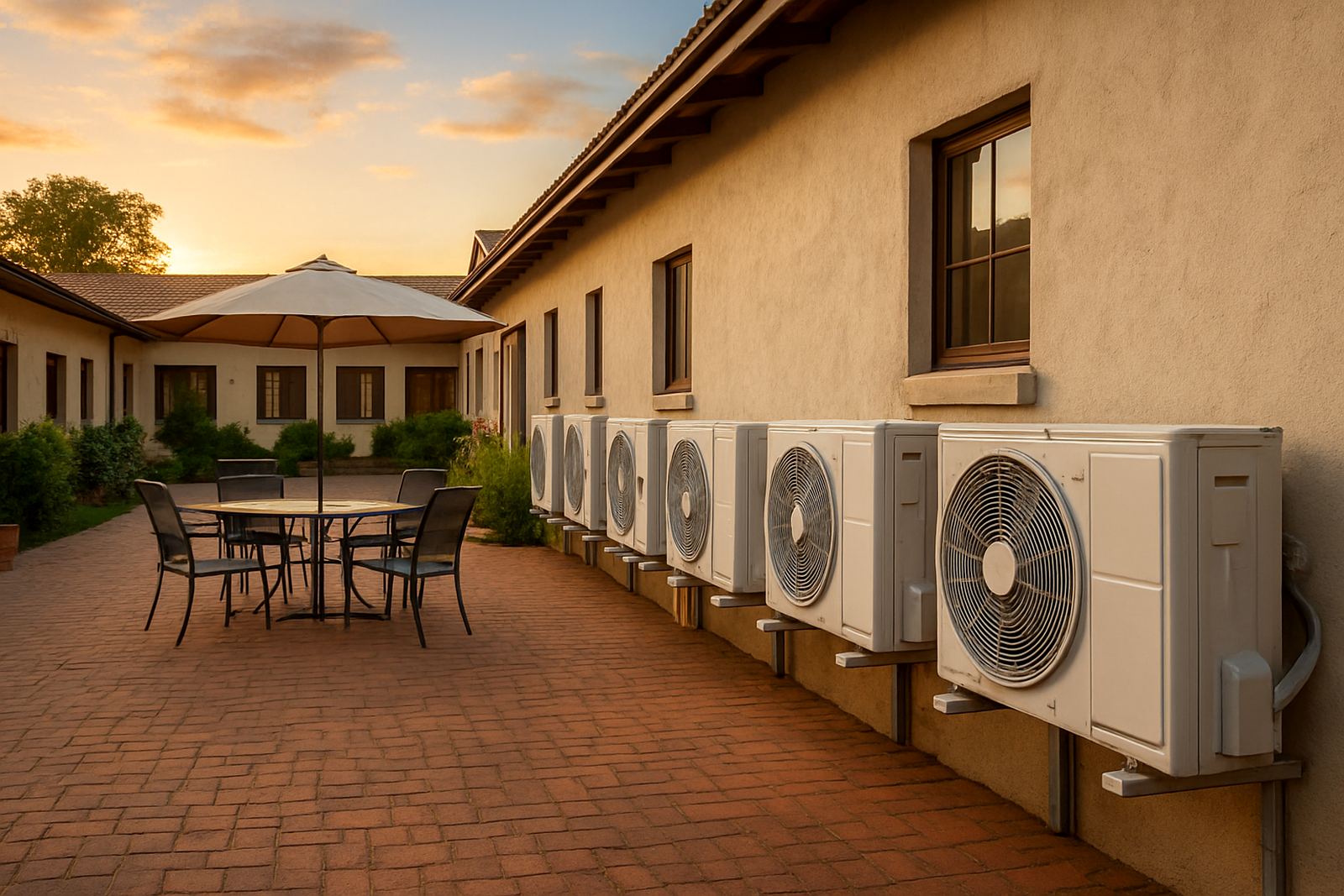
We also had to think about the local weather in Fourways. Summer storms bring dust, rain and power interruptions, while winter mornings can be dry and cold. Units on guest lodges need to cope with both, with good drainage and enough outdoor airflow to prevent strain on the compressor. We kept the outdoor units off busy guest paths and positioned them where they would not pull in recycled hot air from one another. That kind of spacing matters more than people think.
- Work was phased so rooms could remain in use where possible
- External unit positions were chosen for airflow and low visual impact
- Trunking was aligned to existing lines for a cleaner finish
- Noise sensitive times were kept for drilling and wall fixing
Installation process and timeline
The project ran over three weeks from site survey to final handover. Week one was for measurements, final room assessment and confirming the equipment schedule. Week two covered the first phase of installation, including mounting indoor units, setting outdoor brackets and preparing pipe routes. Week three was for the balance of the rooms, commissioning, leak checks and showing the client team how to use the controls and basic filters. That timeline worked well because it kept the lodge operational while the work moved through the building in an orderly way.
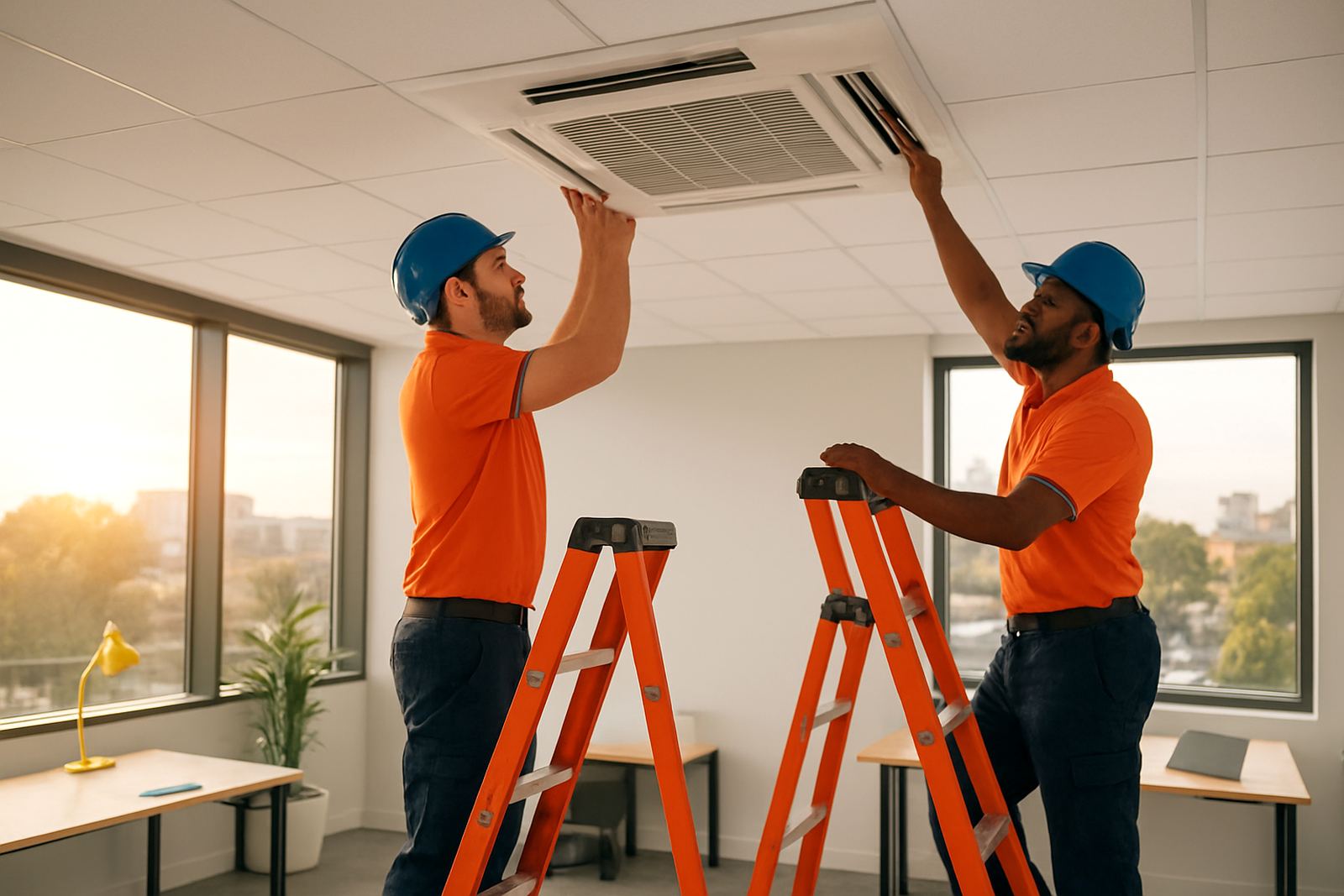
Pieter van Rensburg supervised the fitting team and made sure each room was finished properly before the next one started. Sibusiso Dlamini handled technical checks, including pressure testing and operational testing under real conditions. Ayesha Patel coordinated the schedule with the lodge staff so rooms could be handed back without confusion. For a hospitality site, the handover matters just as much as the install itself because the front office must know which room has which unit and how to reset settings when a guest changes them.
Results for guests and the lodge team
The result was a cleaner guest experience and a simpler way for the lodge to manage room comfort. Rooms now cool down faster in the late afternoon and maintain a steadier temperature overnight. Guests do not have to deal with noisy units or obvious pipe work and the outdoor areas kept their tidy appearance. The lodge team also gained a system that is easy to service, with access points arranged so maintenance does not mean stripping half the wall to reach a connection.
From an operations point of view, the lodge now has a better response to peak booking periods. When rooms are occupied back to back, reliable air-conditioning reduces complaints and helps staff avoid callouts that waste time. The equipment choice also supports lower running costs than old fixed speed systems, especially where rooms are not occupied at full power all day. In a guest lodge, that balance between comfort and power use makes a real difference to monthly bills.
What we would do again on a similar lodge job
We would approach a similar project in the same way again: proper room sizing, careful scheduling, and outdoor unit placement that respects both service access and the look of the property. Guest accommodation needs equipment that disappears into the background and simply works. The install should never draw attention unless a guest is adjusting the temperature. That is the point of a good hospitality system.
For Fourways and the wider Johannesburg North area, we would also keep the same focus on power interruptions, seasonal heat and maintenance access. A lodge should not be left with pretty units that are hard to service or oversized systems that short cycle and wear out early. The best outcome is practical, neat and easy to maintain over the long run. That is exactly how we handled this project, and it is the standard we bring to every guest room installation.
Key facts
| Project type | Guest lodge air-conditioning supply and fit |
|---|---|
| Location | Fourways, Johannesburg North |
| Installation scope | Guest rooms, outdoor unit placement, neat trunking |
| System type | Wall mounted split units with inverter options |
| Timeline | 3 weeks from survey to handover |
| Key benefit | Quiet comfort with tidy finishes and easy servicing |