The brief from a Bedfordview homeowner
The client wanted one main living area cooled through the hot months, with less strain on the municipal supply and no messy add-ons inside the house. The home sits in a built-up Bedfordview street where the family works from home during the day, so the system had to run quietly, start reliably after outages, and keep the room comfortable in full sun.
The brief was practical rather than fancy. They needed a split unit that could run from solar power during the day, support the grid when needed, and still give proper cooling on evenings when the temperature stays high. We also had to keep the outside installation tidy because body corporate rules in the area are strict on visible pipe runs and condenser placement.
- Daytime cooling for a medium-size living area
- Reduced draw from the grid during sunny hours
- Low noise for home office use
- Neat outside finish to suit Bedfordview townhouse rules
Site constraints and what we checked first
Before quoting, we checked roof exposure, inverter capacity, panel space and where the indoor unit could sit without blowing directly across seating. In Bedfordview, many homes have limited north-facing space because of roof angles and nearby trees, so the solar layout had to be planned around real shade, not just a brochure spec.
The property also had an existing backup supply arrangement, so we had to confirm changeover behaviour and avoid overloading the system when the aircon started up. The client wanted a solution that would not trip during peak use, especially on hot afternoons when load-shedding and high demand often arrive together.
- Checked available solar roof area and shade at different times of day
- Confirmed electrical capacity and breaker protection
- Measured internal room size and air throw distance
- Reviewed outdoor unit position for noise and service access
What we supplied and fitted
We supplied a high-efficiency inverter split air conditioner with solar hybrid capability, matched to the room size and usage pattern. The unit was selected for steady part-load performance so it could hold temperature without constant hard starting. For a home like this, that matters because the real saving is not only in power use but in how calmly the unit carries the load through a long summer day.
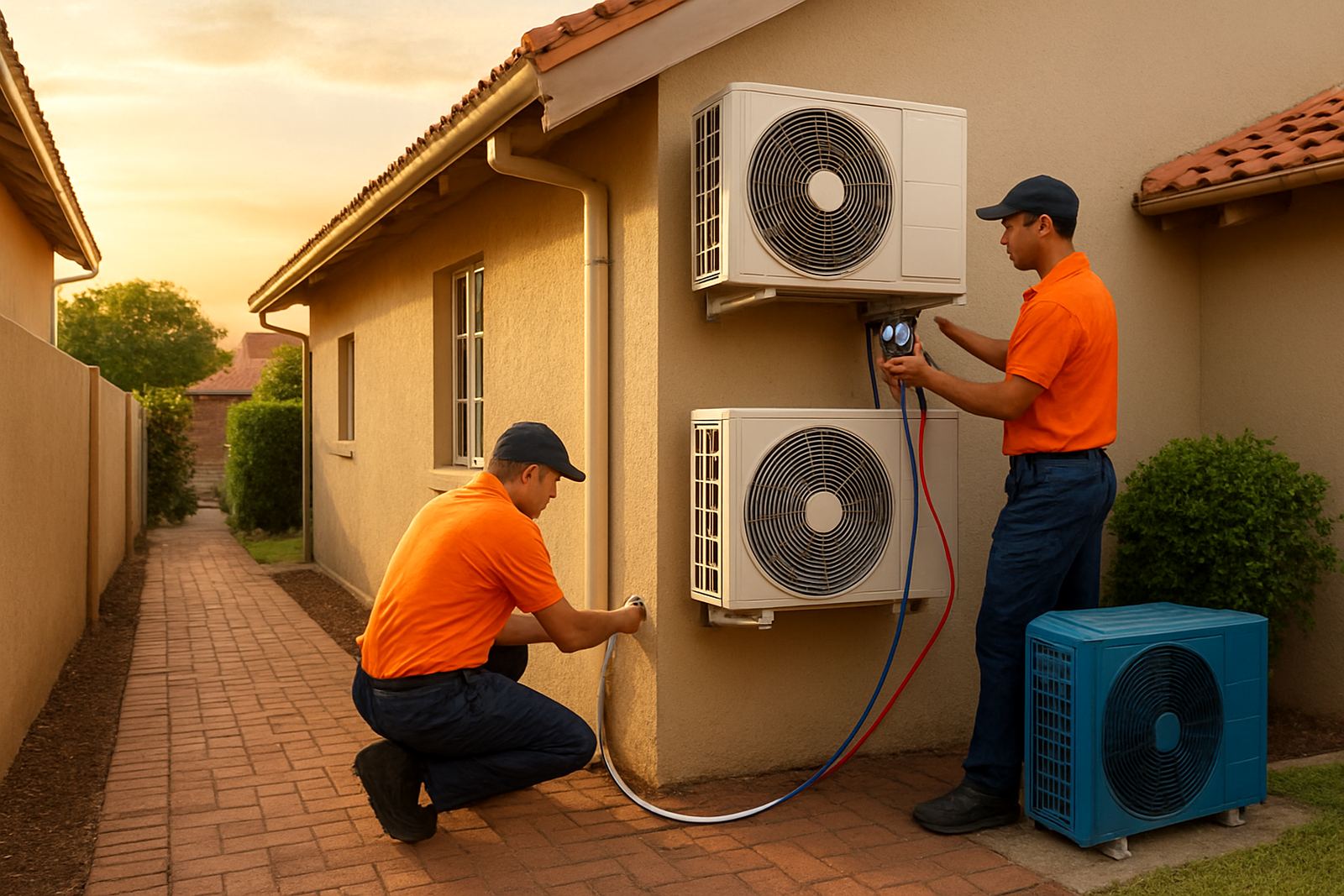
The installation included the indoor fan coil, outdoor condenser, copper pipework, insulated drain line, wall brackets, isolator, cabling and final commissioning. We positioned the indoor unit to avoid direct blast onto the lounge seating and set the outdoor unit on a stable bracketed base with enough clearance for maintenance. The pipe run was kept short and clean, and we sealed the wall penetration properly for weather protection.
- Inverter split system, solar compatible
- Indoor unit sized for a main living room
- Weatherproof isolator and safe cable routing
- Condensate drainage set for reliable flow in summer humidity
- Outdoor unit mounted for service access and lower vibration
How the solar hybrid setup was put together
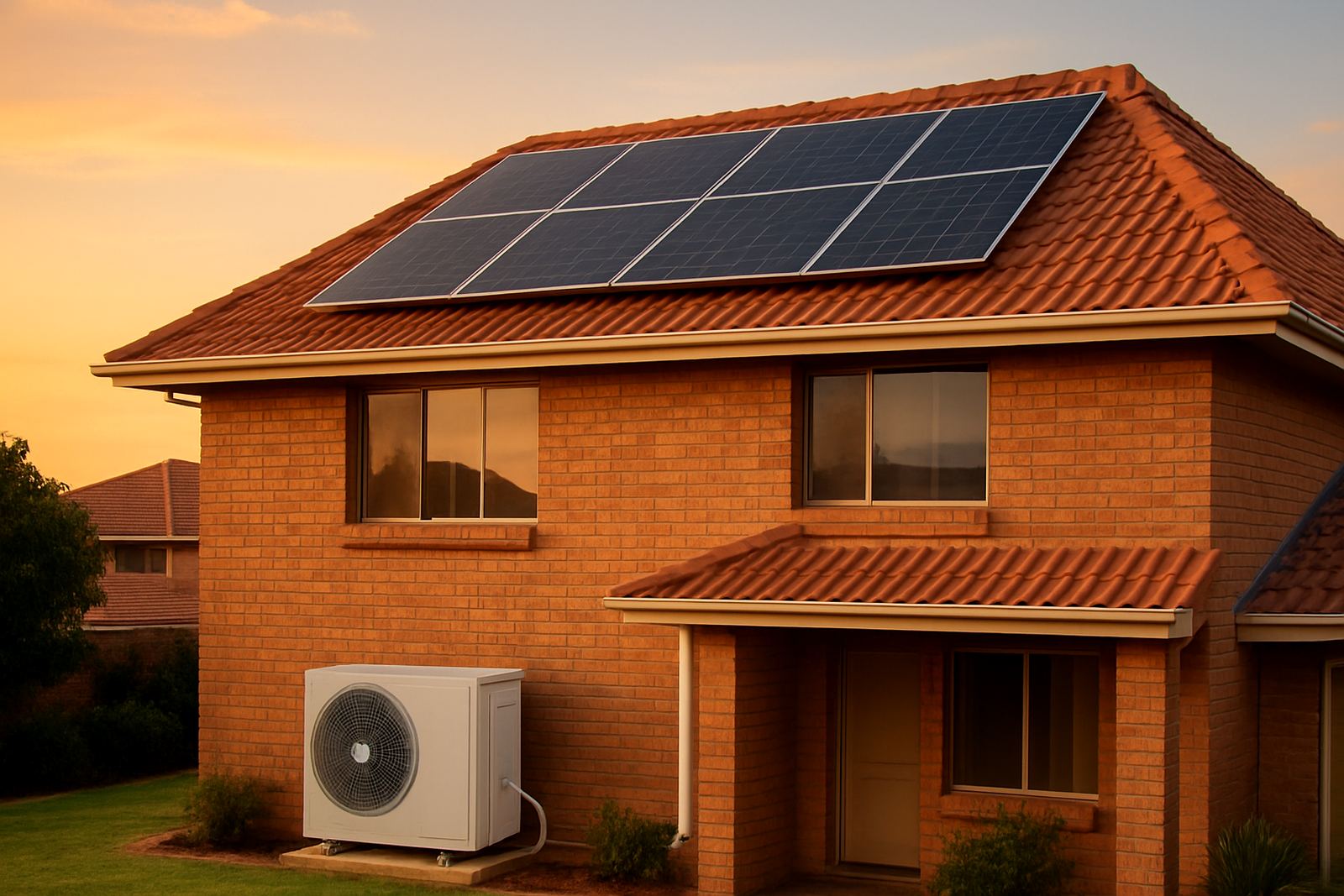
The system was planned to use solar power during the day, then fall back to grid support when cloud cover moved in or the family needed cooling later in the evening. That hybrid approach suits Johannesburg well because winter sun is good but summer cloud build-up can be sudden. The aim was not to make the home fully off-grid, it was to reduce demand where the roof could carry it.
We worked with the existing electrical arrangement and made sure the unit’s startup current, running load and protection devices were correctly matched. The homeowner did not want constant checking or complicated controls, so we set the operating pattern to be simple enough for everyday use. Once installed, the aircon could be used as a normal household unit with the solar supply supporting it in the background.
Because Bedfordview can get dusty in dry months and damp in summer, we also made sure the filter access was easy and the drainage slope was right. Small details like that prevent nuisance leaks and keep the unit performing better over time. One loose drain line can cause a bigger headache than people expect, especialy when the unit is used daily.
Installation timeline and practical handover
The project ran over two weeks from site visit to handover. Week one covered assessment, final sizing and ordering the correct equipment. Week two covered installation, pressure testing, commissioning and a full run check under load. The homeowner was keen to have the system ready before a warm spell and we kept the schedule tight without rushing the workmanship.
After commissioning, we showed the client how to use the temperature settings, fan speed and timer function for better daytime efficiency. We also explained basic filter cleaning and what to watch for after thunderstorms or extended outages. A home system works best when the owner knows what normal sounds and normal airflow should be.
- Week 1: site visit, load check and equipment selection
- Week 2: installation, testing and handover
- Final checks: cooling performance, drainage, noise and electrical safety
The result in daily use
The finished installation gave the home steady cooling through the day with noticeably less demand on the grid. The room reached temperature quicker than the client expected, then held it with lower energy use because the inverter compressor did not keep cycling on and off. That made the space more comfortable for work, rest and entertaining without the hot-cold swings common on older fixed-speed units.
The homeowner also appreciated the quieter running and the cleaner outside appearance. Since the outdoor unit was placed carefully, it does not dominate the courtyard or create vibration against the wall. In practical terms, the family now has a cooling system that fits the house and the neighbourhood, not the other way round.
For similar homes in Bedfordview, Sandton or Randburg, this type of project works best when the aircon size, solar exposure and electrical setup are considered together from the start. That is what prevents disappointment later.
What we would do again on a similar job
We would follow the same approach on another solar hybrid home installation in the area. Start with the room size and the available solar hours, then match the unit to daily usage rather than oversizing it. A larger system can waste power if the cooling load is modest and the room is used in short bursts.
We would also keep the pipe route short, use proper weather sealing, and leave enough room around the outdoor unit for servicing. In Gauteng, that matters because dust, summer rain and load-shedding all affect how often equipment is pushed into real-world use. A good installation should make life easier from day one, not just look tidy on handover.
- Size the unit to the room and usage pattern
- Plan around shade, roof space and municipal constraints
- Keep access simple for servicing and filter cleaning
- Use a hybrid setup where the client wants lower daytime draw
Key facts
| Project type | Solar hybrid aircon installation for a private home |
|---|---|
| Town | Bedfordview, Gauteng |
| System | Inverter split air conditioner with solar hybrid support |
| Use case | Daytime cooling with reduced grid demand |
| Timeline | 2 weeks from site visit to handover |
| Service scope | Supply, fit, commissioning and homeowner handover |