Why a wall unit starts dripping indoors
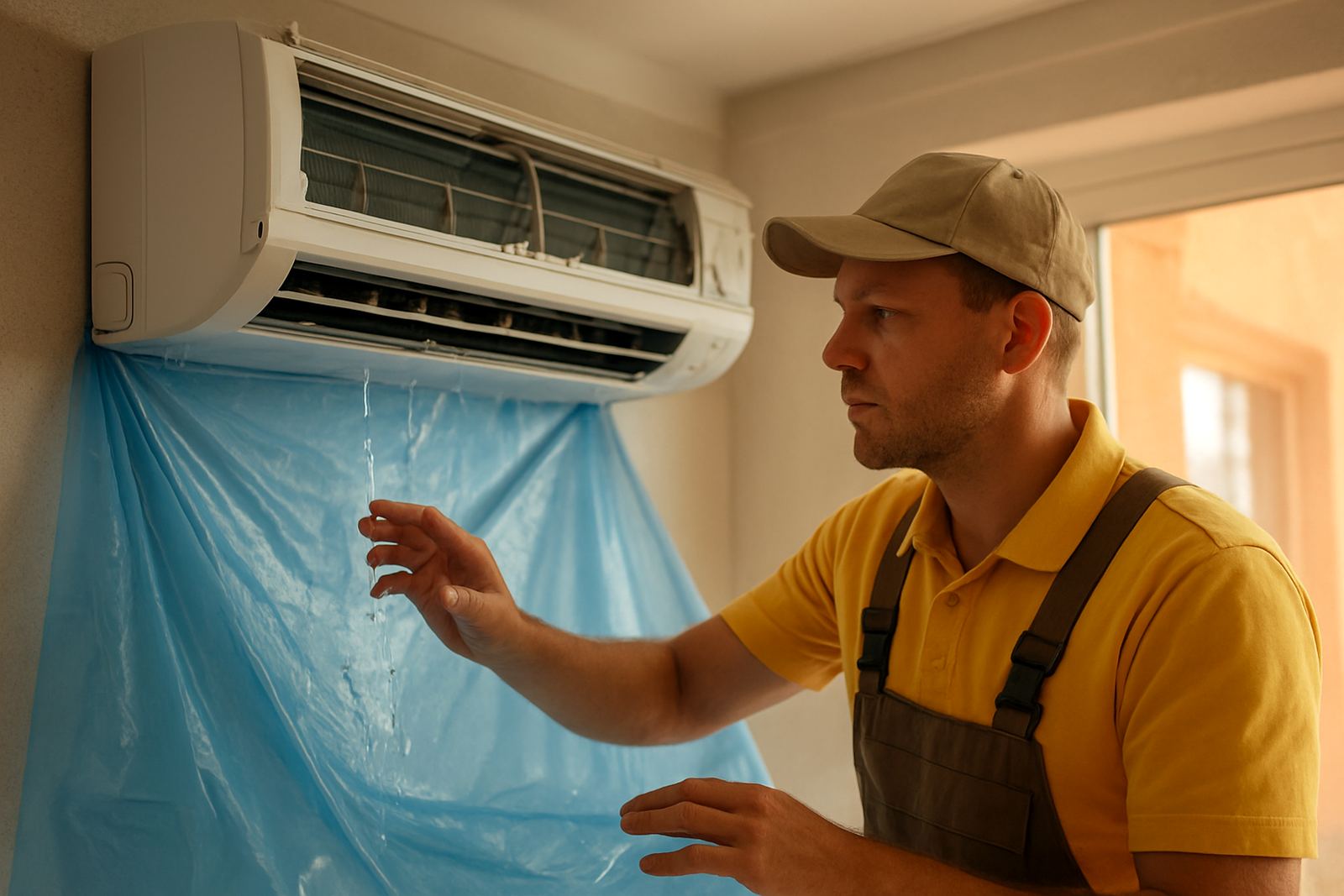
An indoor air-conditioner should move moisture out through the drain pipe, not into the room. When water appears on the wall, under the fascia, or on the skirting board, it means the drainage path has been interrupted or the unit is making more condensation than it can manage. In Johannesburg North and Sandton we often see this after a long dry spell followed by sticky summer humidity, because the system runs harder and produces more water.
Common causes include a blocked drain line, a cracked drain tray, poor installation slope, dirty filters, frozen evaporator coils, or a loose pipe joint. In some homes the problem starts after a quick relocation or a repaint where the drain hose gets kinked behind the unit. It can look small at first, but one slow drip can stain a wall and swell a wooden floor board in a matter of days.
The most common drainage faults we find on site
A blocked condensate drain is the usual suspect. Dust, mould, insects and sludge can collect in the pipe until water backs up and overflows the tray. If the drain exits into a safe outlet outside, you may see a small puddle there when the system is healthy. If there is no discharge at all, the line may be choked or crushed.
Poor fall is another frequent issue. The drain pipe must slope down continuously so gravity can do the work. If the installer left a low point, or the ceiling space has shifted, water can sit in the pipe and move back toward the unit. We also come across installations where the tray is level but the wall bracket or bracket screws are not, which causes the water to collect on one side and spill over.
- Blocked drain pipe from dust or sludge
- Incorrect slope on the drain line
- Loose or split drain hose
- Cracked drain pan inside the indoor unit
How dirty filters can lead to internal ice and water leaks
When filters are clogged, less air passes over the coil. That can drop the temperature too far and cause the coil to freeze. Once the unit switches off or the room warms up, that ice melts and the extra water overwhelms the drain tray. People often call it a leak, but the root problem is low airflow.
This is common in offices in Midrand and on the East Rand where units run most of the day and the filters get ignored. It is also common in homes near busy roads or construction areas, where fine dust blocks the filters faster than expected. A simple clean can solve the issue, but if the coil has already iced up several times, the system needs a proper check for gas charge, fan speed and sensor faults.
- Wash or replace filters every month in dusty areas
- Do not run the unit with blocked return air
- Check that curtains or furniture are not blocking airflow
When the problem is tied to installation or relocation
Not every leak is a servicing issue. If the unit was recently moved, replaced or reinstalled, a drainage fault can show up immediately. A pipe that was bent during relocation, or a wall sleeve that sits too high, can stop water from draining properly. We also see leaks where the unit was mounted too close to a cornice or where the installer left no access for proper cleaning.
In older homes around Randburg and the West Rand, a wall may have settled slightly over time, changing the angle of the drain line. If the unit is level but the drain is not, water finds the easiest escape, which is usually your paintwork. In some cases the drain exit outside is blocked by building debris, leaves or a nest, so the water has nowhere to go.
If the leak started after a recent installation, ask for a full recheck rather than a quick patch. A proper inspection should include the indoor tray, the drain outlet, the pipe fall, the pipe insulation and the bracket alignment.
What you can safely check before calling for service
Before you switch the unit off for the day, do a few basic checks. Look at the filters and see if they are dusty. Check whether the drain outlet outside is dripping at all. If the unit is making a rattling sound, or you can see ice on the indoor pipes, stop using it and let it thaw before restarting. Do not poke wire into the drain pipe, because that can damage the line or push the blockage deeper.
If water is dripping close to electrical points or down a feature wall, turn the unit off at the isolator and place a container under the leak. Keep children away from the area. If the water is brown, smells sour, or keeps returning after a clean filter wash, the problem needs more than a home fix. That is usually where service, not guesswork, saves time and money.
A Johannesburg example and when to book a technician
A homeowner in Bryanston recently called after finding a damp patch above a lounge curtain rail. The unit had been cooling well, but no one had noticed that the drain hose was partially kinked behind the casing. On hot afternoons the tray overflowed, then the water tracked inside the wall and showed up later as a stain. The fix was simple once the unit was opened, but the plaster damage took longer to dry than the repair itself.
Call for service if the leak keeps returning, if the unit has frozen more than once, if the drain line is hidden in a ceiling, or if the water appears after every heavy cooling cycle. It is also worth booking a technician if you need a check on a replacement unit, an older office system, or a unit that has not been serviced in over a year. In Gauteng, where aircons work hard through summer storms and load-shedding recovery cycles, routine maintenance helps prevent these leaks before they start.
Airconditioning Superstore handles aircon servicing, repairs, replacements and relocations across Johannesburg North, Sandton, Randburg, Midrand, the East Rand and the West Rand. If your indoor unit is leaking, a proper inspection will show whether it needs cleaning, a drain repair, or a full system check.