Why open doors push cooling systems past their limit
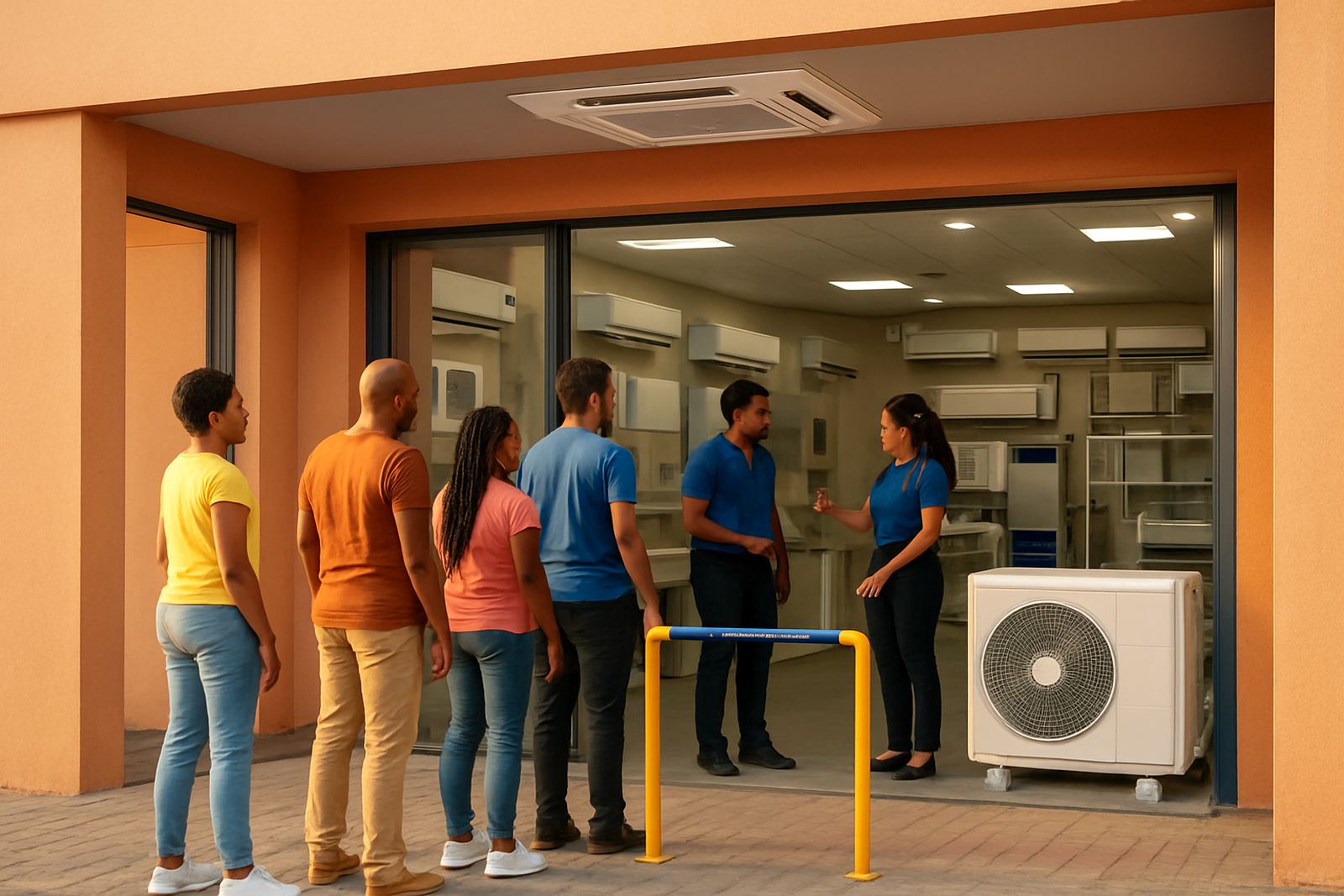
Every time an entrance opens, cooled indoor air escapes and warm outside air rushes in. In a shop on Rivonia Road or a small store in Randburg, that exchange happens hundreds of times a day, and the aircon has to recover again and again. The result is uneven temperatures, longer run times, and complaints from staff standing near the till or display tables.
Open entrances also bring in dust, humidity and warm air from passing cars. In summer, a west-facing shopfront can pick up a lot of heat from glass and paving. In winter, the issue changes but does not disappear, because cold outside air keeps entering and the system still works hard to hold a steady indoor temperature.
When cooling loss is ignored, the signs are usually easy to spot: one area feels comfortable while the front door feels like a wind tunnel, the compressor cycles too often, and the electricity account climbs month after month.
Shop layout matters more than many owners expect
The first fix is often not a bigger unit but a smarter layout. If a clothing rack, queue line or promotional stand sits right by the entrance, it creates turbulence and allows conditioned air to spill out faster. In a pharmacy, hardware store or takeaway, moving stock a few metres back can make a proper difference.
For stores in Sandton, Midrand and busy parts of the East Rand, we often look at how the door, ceiling height and customer flow interact. A glass entrance with no shade needs different treatment from a shaded mall frontage. Ceiling fans, if used, must be positioned carefully so they do not fight the aircon and blow cool air straight out the door.
- Keep tall displays away from the entrance line
- Leave a clear buffer zone near automatic or swing doors
- Separate queue areas from the coldest supply path
- Check that return air grilles are not blocked by stock or signage
Air curtains, zoning and door control help more than guesses
Air curtains can help at active retail entrances, but only when they are sized and installed properly. They should create a visible barrier across the doorway, not just make a noise. If the airflow is weak or misaligned, the unit can actually add discomfort without stopping much of the heat gain.
Zoning is another practical option. A showroom with a front sales floor, a stock area and a back office does not need the same temperature everywhere. Separating those zones lets the system cool the public area without wasting power on spaces that open less often. For offices with retail counters, this can make the whole building easier to manage.
Door closers, adjusted hinges and clear staff procedures are small things, but they matter. If the entrance sits open while someone is helping a customer, the cooler works against itself. A simple habit like closing the door between client groups can save more than many owners expect.
Why proper sizing beats running a machine flat out
A lot of shops think the problem is that the unit is too small, but not every hot entrance needs more capacity. Sometimes the unit is oversized, short cycling and failing to remove humidity properly. Sometimes it is undersized, with a weak supply path or dirty filters making matters worse. Either way, the answer is not guesswork.
We look at floor area, ceiling height, glazing, occupancy and how often the doors open. In a busy Johannesburg North retail space with a lot of customer movement, the load on the system is very different from a quiet office waiting room. If the equipment is wrong for the job, the cooling loss at the entrance just exposes that weak point faster.
- Check refrigeration charge and airflow first
- Measure the actual heat load, not just the square metres
- Review whether one unit should be split into zones
- Compare running hours against customer foot traffic
Local conditions in Gauteng make entrance cooling harder
Gauteng heat is one thing, but the real strain often comes from changing conditions through the day. A store in Johannesburg North may start cool in the morning, then face hot sun on glass and dry afternoon air by lunch. If the entrance opens often, the system has no real rest period.
Load-shedding makes the issue more complicated. When power returns, systems restart under pressure and the shop may need to catch up fast after a warm interruption. If the cooling load is already high because the door stays open, recovery takes longer and staff feel it at once. That is why many businesses now ask for supply-and-fit solutions that suit their trading pattern instead of standard sizing only.
In coastal areas, humidity changes the conversation. In Gauteng, it is often about heat spikes, sun load and heavy foot traffic, but the principle stays the same. The more often the entrance opens, the more disciplined the cooling plan has to be.
A Sandton example from a busy retail frontage
A fashion store in Sandton with a wide glass front and a high customer count was struggling every afternoon. The staff said the entrance felt warm even when the main floor was cold. The owner assumed the units needed replacing, but the real issue was that the display tables sat too close to the door and the return air path was blocked by stock and signage.
After a site survey, the layout was changed, the front buffer was cleared, and the entrance control was reviewed. The system did not need to work as hard, and the staff stopped fighting hot spots near the till. The power draw also steadied because the units were no longer chasing heat loss every few minuits.
That kind of fix is common in retail. Often it is not one big fault, but a few small issues adding up until the front of the shop is always uncomfortable.
What helps most when doors must stay open
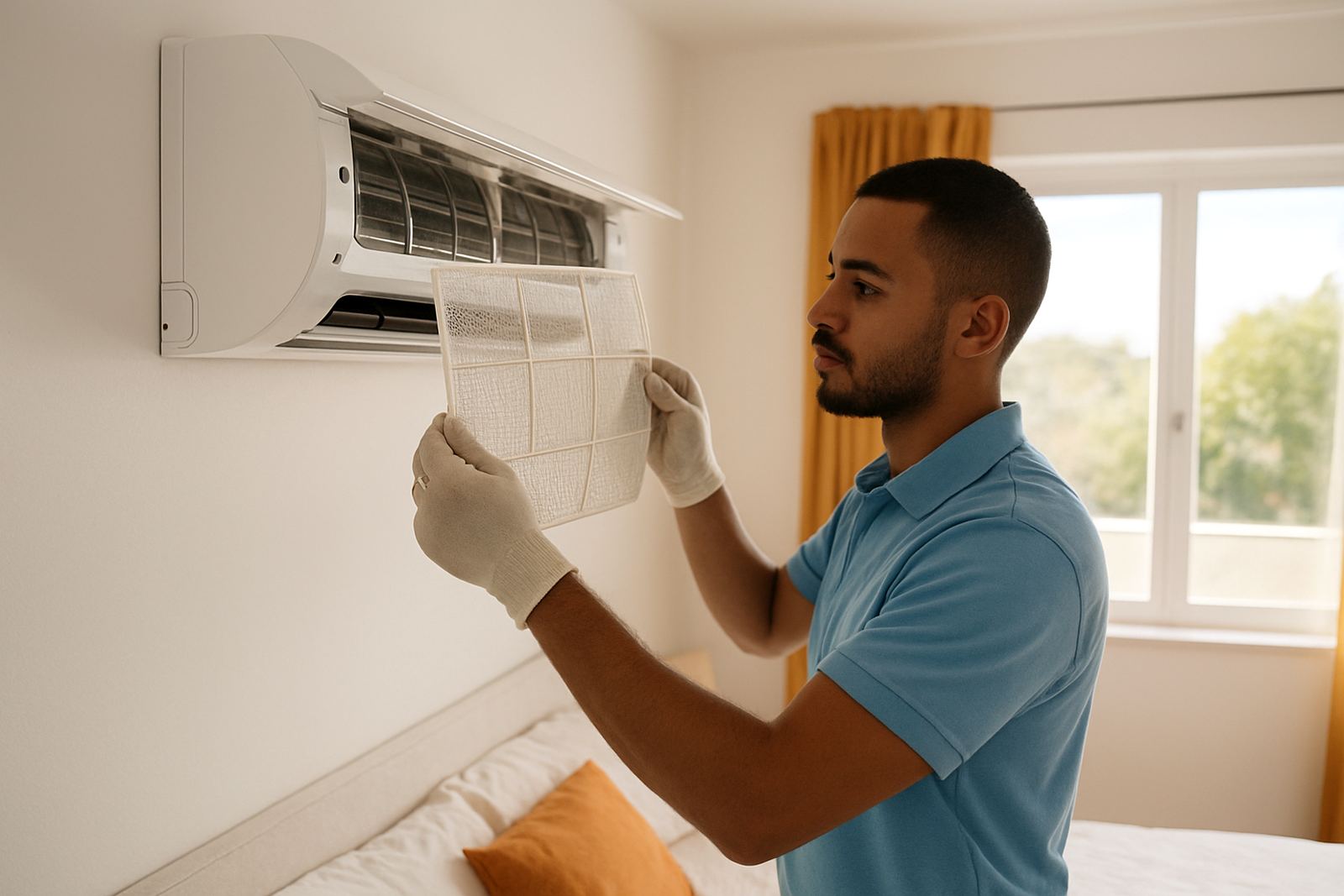
Some shops cannot keep an entrance closed for long, especially during peak trading hours. In those cases, the best plan is a mix of equipment, layout and discipline. Maintenance also matters because dirty filters, low gas charge and weak fans reduce the system’s ability to recover after each door opening.
For businesses in Randburg, Midrand, the East Rand and the West Rand, a proper maintenance plan can prevent a lot of nuisance call-outs. It keeps the system ready for busy periods and helps spot weak points before summer arrives.
- Service filters, coils and drains before peak season
- Test whether the entrance barrier is actually containing air
- Review thermostat settings and operating hours
- Plan for future changes in foot traffic or shop layout
Open doors are part of retail, but wasted cooling does not have to be. With the right system and a practical setup, a shop can stay comfortable, keep power use under control and handle customers properly, even on the busiest days.