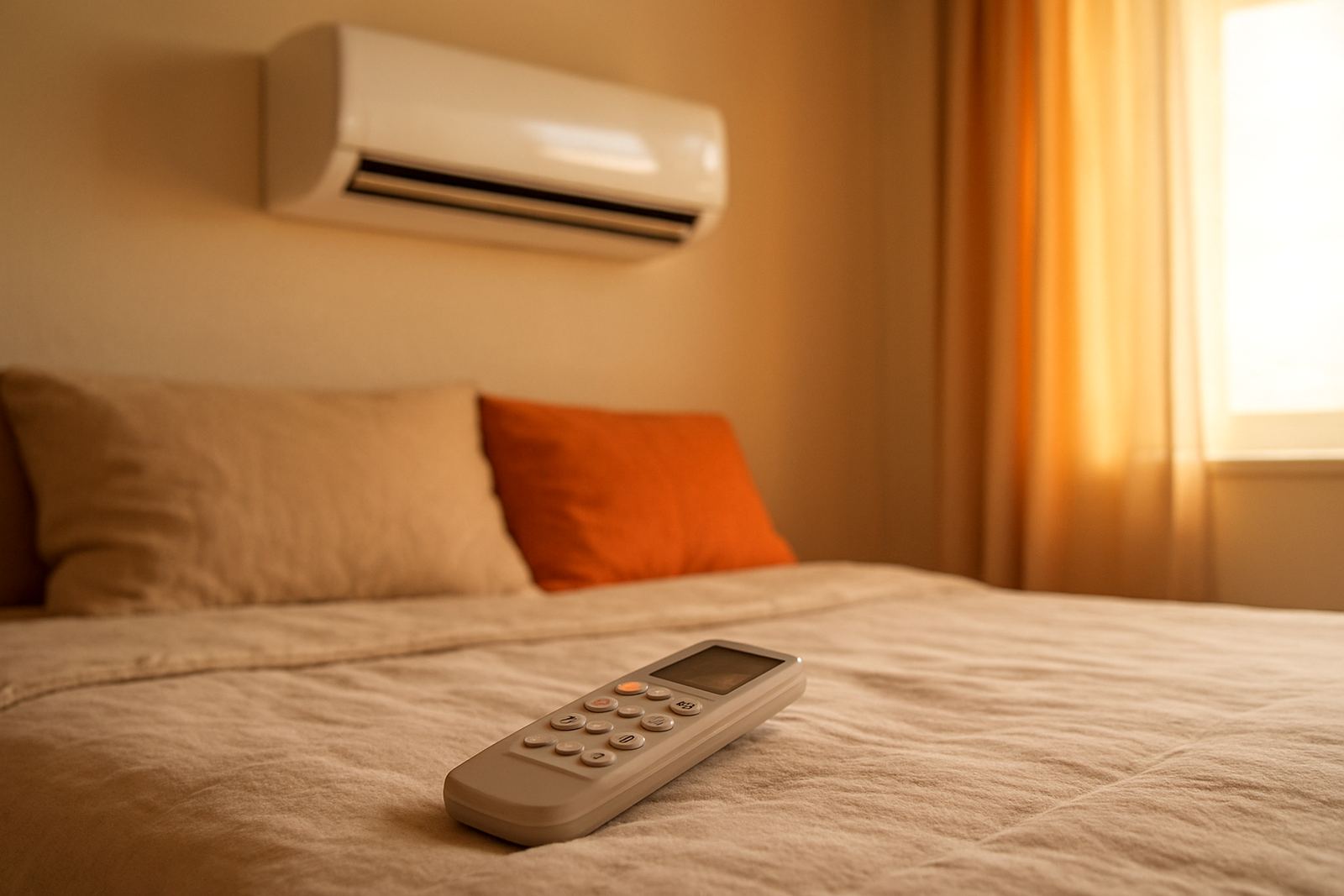
What temperature helps most people sleep well?
For most adults, a bedroom temperature between 18 and 21 degrees C is a good starting point. That range is cool enough to help the body lower its core temperature for sleep, but not so cold that you wake up with a stiff neck, dry throat or blocked nose.
In practical terms, many South African homes do better at around 20 degrees C in summer and a touch warmer in winter, especially where bedding is light and the room is not well insulated. If you sleep under a thicker duvet, you may feel fine a little lower, but if you have a fan running or a child in the room, the setting often needs adjusting.
The right number is also affected by age, health and room size. Older people often feel cold faster, while young children can overheat more quickly under heavy blankets. That is why the best bedroom temperature is the one that lets you fall asleep comfortably and stay asleep without waking to kick off the covers.
Why overcooling at night causes more trouble than most people expect
Many people set the aircon too low because the room feels hot when they first climb into bed. After half an hour the body starts cooling down naturally, and the extra cold can become a problem. You may wake up with dry sinuses, a sore throat or a headache, and in some cases the room feels chilly but the blankets feel warm, which makes sleep patchy.
Overcooling also wastes electricity. If a split unit is pushed too hard at night, it runs longer and uses more power than necessary. During load-shedding, that can mean you have less battery time or a heavier municipal bill the next day. A moderate setting usually gives better comfort and lower running costs.
- Start with 20 degrees C and adjust by 1 degree C after two nights.
- Keep bedroom doors and windows closed while the unit is running.
- Use a ceiling fan on low speed if you want air movement without extra cooling.
- Choose lighter bedding before dropping the temperature too far.
How to set a bedroom aircon for winter and summer
In summer, especially in Johannesburg North, Sandton and Randburg where late afternoon heat can linger, a bedroom often feels best when it is cooled before bedtime. Set the unit to a moderate temperature and let it run for a short period before you go to sleep. If the room has south-facing walls or good shade, it may only need a small drop from outdoor temperature.
In winter, the goal changes. A bedroom that is too cold can disturb sleep just as much as a hot one, particularly in a brick home with tiled floors. For winter nights, many households are comfortable with 19 to 21 degrees C if the unit also has a heating function. If the room is very dry, keep a bowl of water nearby or use a humidifying method suitable for the space so the air does not feel harsh.
Remember that a bedroom in a townhouse in Midrand will behave differently from a free-standing house in the East Rand. Ceiling height, shade, insulation, curtain type and window size all matter. A west-facing room usually holds heat longer, so it may need earlier cooling than a room that stays shaded after 3 pm.
Bedrooms with children, babies or older family members
Families often try to set one temperature for everyone, but that does not always work. Babies and small children can overheat fast, while grandparents may feel the cold more. If a child is sleeping in the room, keep bedding breathable and avoid blasting cold air directly over the bed.
For shared rooms, the best approach is steady air movement and a moderate setpoint rather than a very cold room. A quiet inverter unit can help because it keeps temperature changes smaller through the night. That matters in homes where someone is a light sleeper and wakes when the compressor starts and stops too often.
- Do not point cold air straight at a cot or pillow.
- Keep the filters clean so the unit does not push dusty air into the room.
- Use blackout curtains if the room heats up from early morning sun.
- Make sure any heater mode is safe and not too close to bedding.
Humidity, coastal air and why dry rooms feel colder than they are
Temperature alone does not tell the full story. A bedroom at 20 degrees C can feel very different in dry air than it does in humid air. In coastal conditions, excess moisture makes the room feel sticky and harder to sleep in. In dry inland air, the same temperature can feel colder and can leave lips, nose and throat dry by dawn.
That is why bedroom comfort is a mix of temperature, airflow and humidity. If the room feels cold but stale, check whether the aircon is pulling moisture too far down. If the room feels warm but clammy, the issue may be too little dehumidifying or poor ventilation during the day. In both cases, the answer is usually adjustment, not simply lowering the temperature further.
A well-sized unit should cool the room without turning it into a fridge. If the system is too large for the bedroom, it may cool fast and switch off before it has removed enough moisture. That can leave the room cold but uncomfortable, which is a common complaint in bedrooms across Gauteng.
When the aircon itself is part of the sleep problem
Sometimes the bedroom temperature is not the real issue. A unit may be noisy, poorly installed, or short cycling because it was not matched properly to the room. If the bedroom cools quickly but then swings warm again, the temperature setting is only part of the story.
Look out for these warning signs:
- Air blowing hard enough to disturb sleep
- Water dripping outside or inside the room
- Dusty smells when the unit starts up
- Uneven cooling between one side of the room and the other
- Frequent tripping during evening use or after load-shedding
In homes around Midrand and the West Rand, we often see bedrooms where the unit is fine on paper but not on the wall. A proper supply-and-fit assessment checks room size, window position, insulation and where the bed sits. That way the system cools the room evenly instead of freezing one corner and leaving the rest warm.
A simple night-time routine that keeps the bedroom comfortable
The easiest way to find the best bedroom temperature is to build a small routine and stick to it for a week. Start with a moderate setting, use the same bedding, and adjust only one thing at a time. Change the fan speed, not the temperature and the bedding and the curtain layout all at once.
For many Johannesburg households, a good routine looks like this: close the room early, cool it before bed, set the aircon to around 20 degrees C, and keep the airflow off the bed. If the room is still too warm, lower the setting by one degree C rather than making a big jump. Small changes are easier to live with, and they usually save power too.
If you are still waking up cold or sweating at night, the answer may be a servicing issue, a sizing issue, or a room layout issue. A good night’s sleep starts with steady comfort, not an icy blast.