What the 12 000 BTU solar hybrid unit does
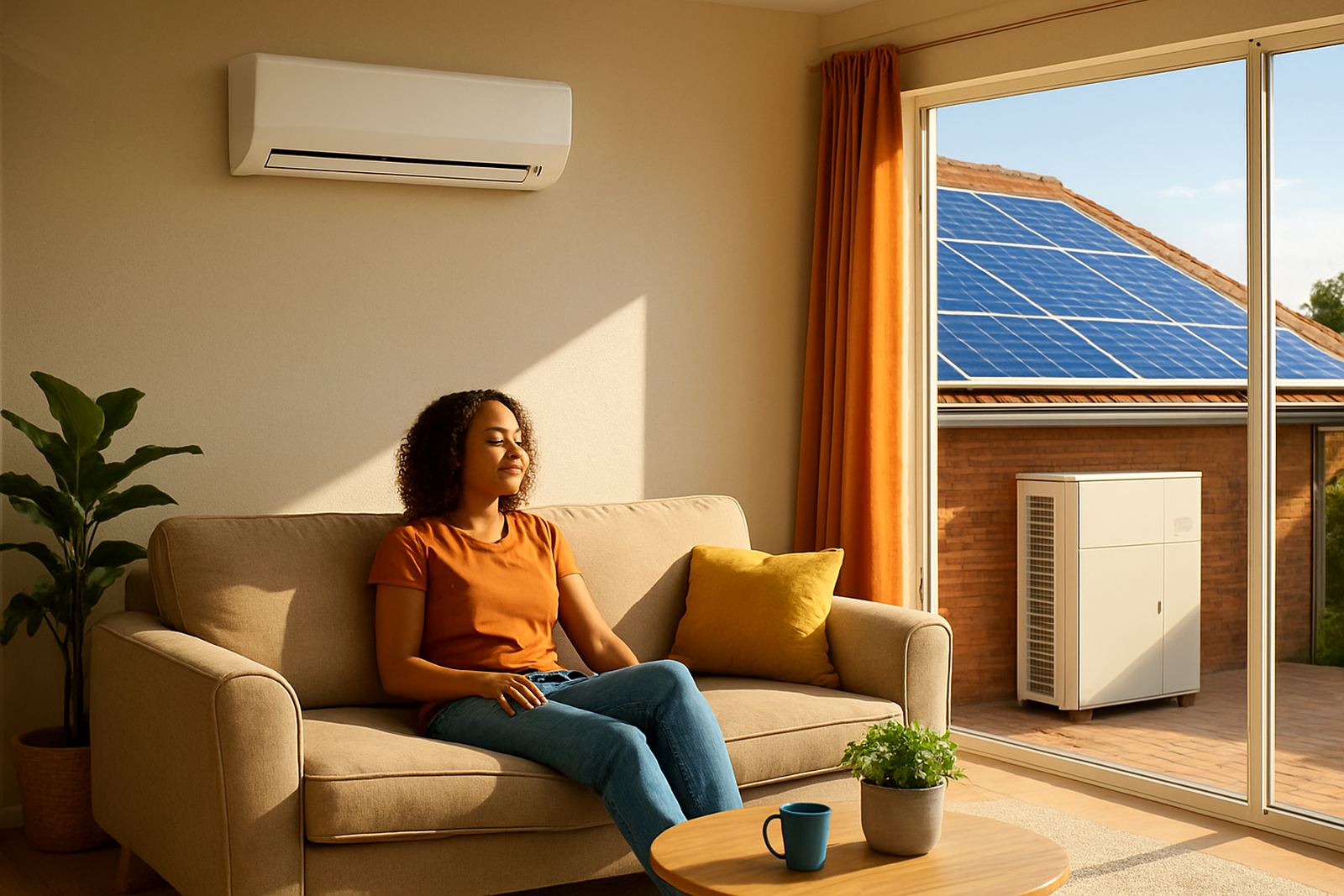
This model is built for everyday cooling with the option to draw power from solar input first, then switch over to mains when needed. In plain terms, it gives you a better chance of keeping a bedroom, lounge, small office or flatlet cooler without relying on one power source only. For many homes in Sandton, Randburg, Midrand and the East Rand, that makes daily use easier when the power supply is erratic.
The 12 000 BTU size is the middle ground for a lot of South African rooms. It is stronger than a small bedroom unit, but not as power-hungry as a large lounge model. If your room gets afternoon sun, has high ceilings, or carries heat from a kitchen next door, this size is often the right starting point.
Sizes, options and where it fits best
Solar hybrid units are usually chosen by room size, glass area and the amount of heat in the space. A 12 000 BTU model is commonly used for:
- main bedrooms from about 18 m² to 25 m²
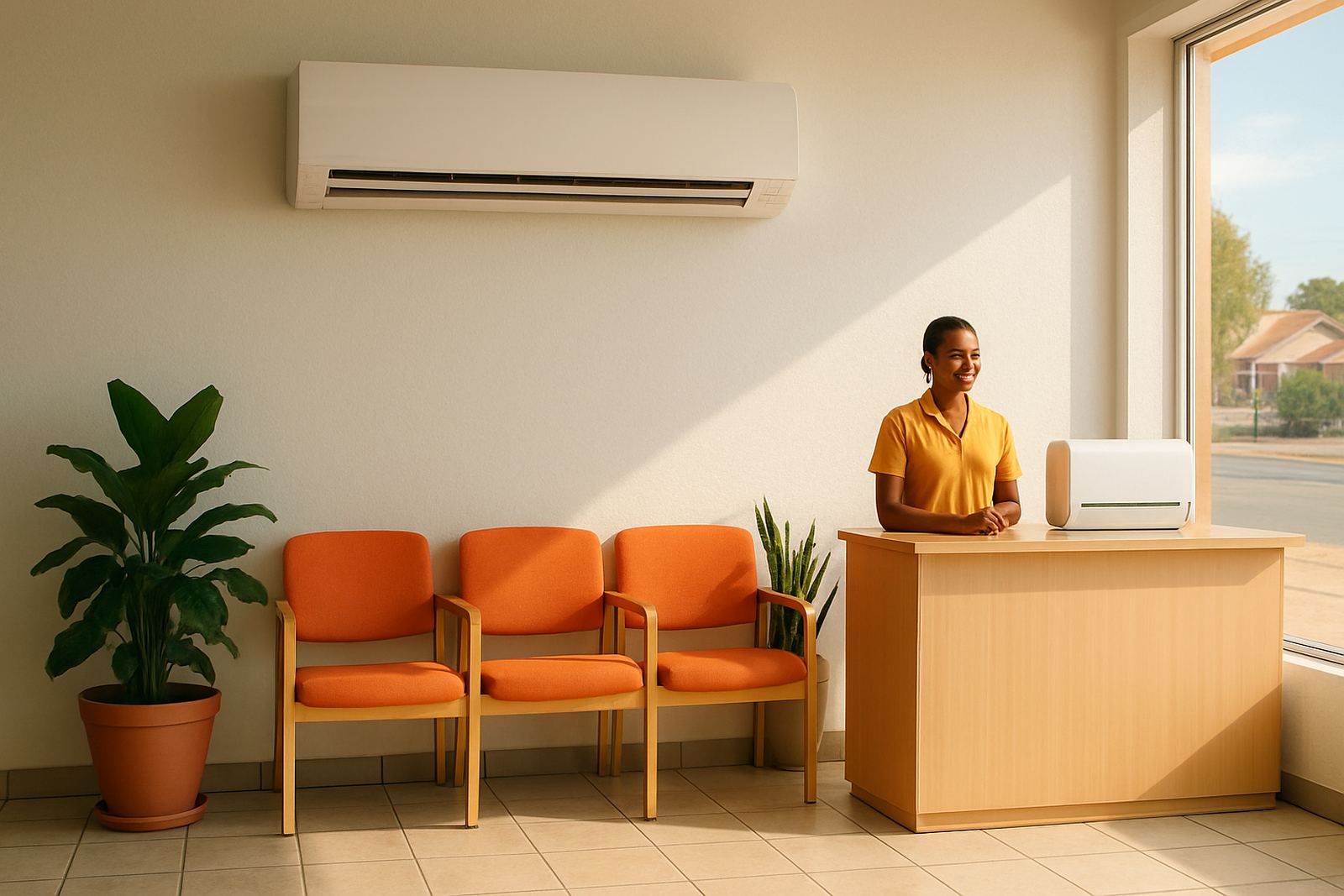
- small offices or consulting rooms
- studio flats and open-plan sections with moderate heat load
- home studies that need cooling during working hours
If the room faces west, gets strong afternoon sun or sits above a garage, sizing may need to go up. If the space is shaded and well insulated, this size may be enough. We can assess the room before supply so you do not end up with a unit that works too hard or cools too slowly.
Options usually include wall-mounted indoor units, remote control operation, timer functions, sleep mode and different pipe run lengths for installation. Some jobs may also need a longer drainage route or a neater trunking finish, depending on the building layout.
Installation, power supply and what the site must allow
For supply-and-fit work, the installation normally needs a suitable wall space, a safe outdoor mounting point and a power route that meets South African electrical rules. In some homes the electrician may need to confirm breaker size, cable route and isolation before we commission the unit. That is especially important where the system will run often or where the property already carries a lot of load.
Because this is a solar hybrid model, the solar side must be matched correctly to the unit and the site. Some installations will use existing solar infrastructure, while others may need additional wiring or a dedicated arrangement. We check the set-up before the job starts so there are no surprises on the day.
- confirm the room size and wall type
- check the electrical supply and breaker space
- allow for the outdoor unit position and airflow
- make sure drain water can discharge safely
- plan for pipe length and neat routing
If you are in a sectional title complex, office park or a building with body corporate rules, get approval early. Condensation discharge, bracket fixing and visible pipe routes can all matter in those settings.
Cooling performance in Gauteng conditions
Johannesburg weather can change in one day, and a room that feels fine in winter can become uncomfortable by October. This unit is suitable for steady cooling in dry inland heat, where the air is not as humid as the coast but the sun still does plenty of work. It is often a good fit for bedrooms that need quiet operation at night and for small offices that run through the day.
Hybrid use makes sense when the power situation is not steady. During brighter hours, solar input can support operation, and mains backup helps when weather or supply conditions change. That is useful for home offices, practices and small commercial spaces that cannot afford frequent downtime. It also helps reduce the strain on the grid side of the system, which can mean better day-to-day running costs.
For coastal customers moving inland or family homes in Gauteng that still carry humidity from summer rain, the dehumidifying effect can make the room feel cooler without dropping the temperature too low. That matters when you want comfort without the cold, dry blast some people dislike.
Care, servicing and keeping the unit healthy
Like any aircon, this model works better when it is cleaned and checked regularly. Filters need attention, the indoor coil must stay clear, and the outdoor unit should have enough breathing room. Dust build-up in Gauteng can block airflow faster than many owners expect, especially near busy roads or construction areas.
We recommend a servicing routine that looks after both cooling performance and electrical safety. If the unit runs most days, a yearly service is usually a practical minimum. In a shop, office or surgery, service intervals may need to be shorter. If you notice weak airflow, water dripping inside, strange smells or the unit switching on and off too often, book a check before the fault gets bigger.
- clean filters regularly, especially in dusty months
- keep furniture and curtains away from the indoor return area
- make sure the outdoor condenser is not boxed in
- watch for blocked drainage in rainy season
- book service before peak summer use
Our servicing team can handle maintenance plans, fault finding and repairs across Johannesburg North, Sandton, Randburg, Midrand, East Rand and West Rand.
What to check before you order
Before you place an order, it helps to confirm a few details so the correct unit and fitting plan are supplied. This keeps the process simple and avoids back-and-forth later.
- room size in square metres
- ceiling height and sun exposure
- whether you already have solar power on site
- distance between indoor and outdoor mounting positions
- access for ladders, scaffolding or a safe working area
- whether the job is for a home, office or light commercial space
If you are replacing an older system, we can also check the existing pipework, brackets and drain route. In some cases a replacement is straightforward, but on older properties a cleaner re-fit may be the better call. Thabo and the team in Johannesburg North can advise on supply, fitment and the right option for your room. If you want help choosing between solar hybrid, inverter or standard split options, send us the room details and we will match the unit to the space.
Key facts
| Cooling capacity | 12 000 BTU |
|---|---|
| Type | Solar hybrid split air conditioner |
| Suitable room size | About 18 m² to 25 m², depending on heat load |
| Power setup | Solar input with mains backup |
| Installation | Supply and fit available in Gauteng |
| Typical use | Bedrooms, small offices, studios and home studies |