What a large portable aircon does
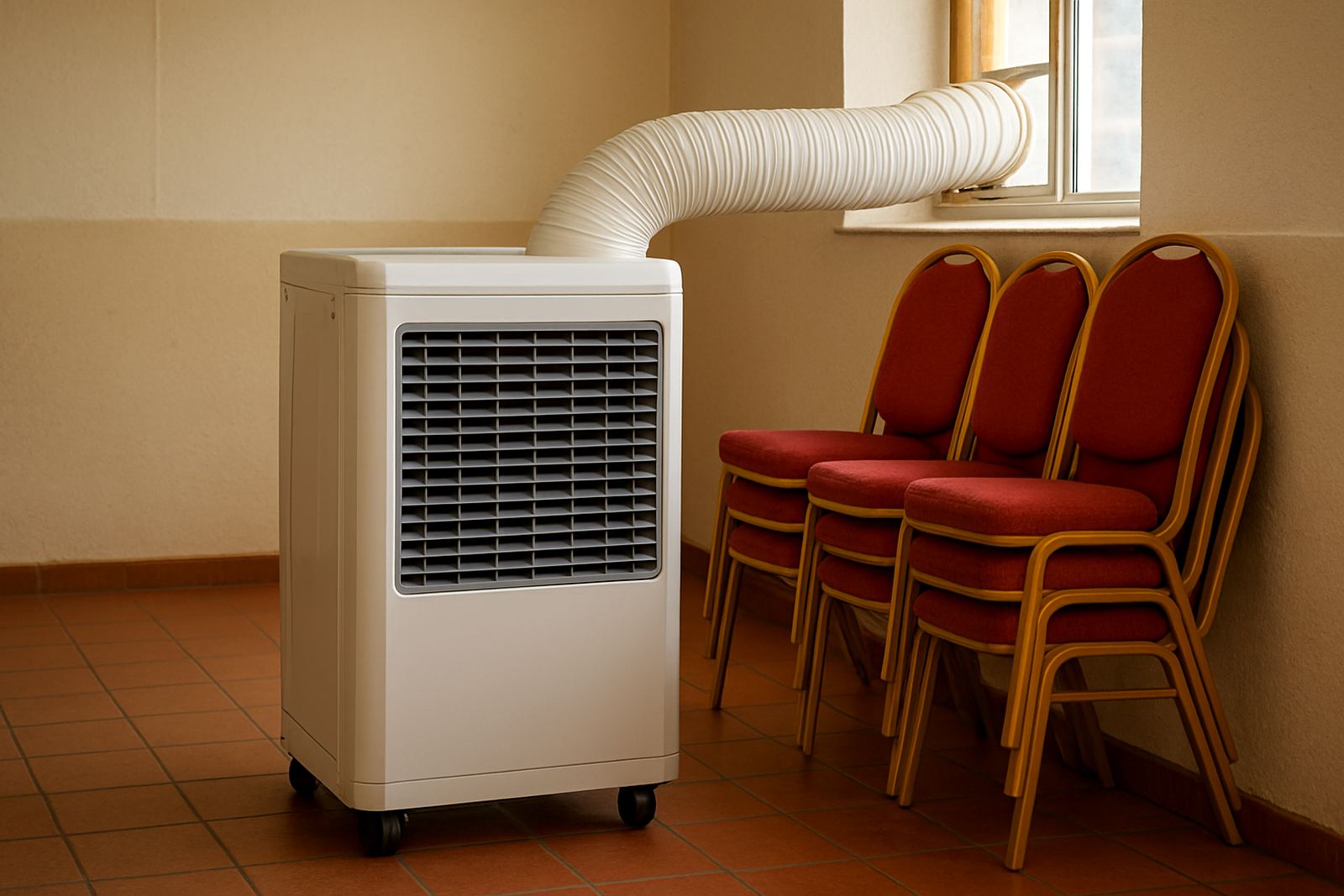
A large portable aircon is a free-standing cooling unit made for stronger spot cooling in spaces where a permanent split system is not the right move. It is often used for temporary offices, meeting rooms, server support areas, marquees with solid side walls, retail overflow areas and homes during a breakdown or replacement wait. In Gauteng, where afternoon heat can build quickly and load-shedding can throw schedules off, a portable unit can keep a room usable while other work is being planned.
These units are not meant to cool an entire building. They are for one area at a time, and they work best when doors stay closed and the hot air is vented correctly. If the room has heavy glass, poor shade, or many people moving in and out, the unit will still help, but it should be sized with care. A larger portable unit can be a very useful bridge solution, and in some cases it becomes the right long-term answer for a particular room. It is not magic, but it does the job where needed.
Sizes, output and the options to compare
Large portable aircons are normally selected by cooling capacity, airflow and the type of room they must handle. The bigger the room and the higher the heat load, the more important it is to check the real output instead of only looking at physical size. We supply and fit units for homes and offices in Johannesburg North, Sandton, Randburg, Midrand, East Rand and West Rand, and the right size often depends on ceiling height, number of people and whether the area gets sun through the day.
- Cooling output: check the kW or BTU rating, then match it to the room size and heat load.
- Air delivery: higher airflow helps push cooled air further, especially in long rooms or open-plan areas.
- Single-hose or dual-hose: dual-hose models usually cope better in hotter rooms because they manage intake and exhaust more efficiently.
- Built-in water tank: useful where condensate drainage is awkward, though some units still need regular emptying.
- Remote control and timer: handy for offices, event rooms and overnight use.
- Noise level: important for boardrooms, bedrooms and customer-facing spaces where too much fan noise becomes a problem.
Do not choose only on price. A cheaper unit that is too small will run hard all day and still leave the room warm. The better match is usually the one that suits the space properly, even if it costs a little more upfront.
Where this unit suits best
This type of aircon is useful where flexibility matters. It can be moved from room to room, or brought in quickly for a short term need. That makes it helpful for businesses that cannot wait for a full fixed installation, or for families who need relief during a heat wave while a permanent system is being planned.
- Temporary offices and site cabins
- Event spaces, function rooms and hospitality overflow areas
- Homes with one problem room, such as an upstairs bedroom or sunroom
- Small shops needing short-term cooling during repair work
- Server rooms or equipment areas needing urgent spot cooling
- Rental properties where permanent changes must be kept to a minimum
In coastal humidity the unit must also be matched to moisture removal as well as temperature drop. Inland, the bigger concern is usually high dry heat and fast afternoon temperature rise. Either way, the room needs decent sealing. If warm air keeps entering from open doors, the machine will work much harder and performance drops. For a busy office in Sandton or Midrand, that can mean the difference between a comfortable afternoon and a room that still feels stuffy by 3 pm.
Installation, venting and power requirements
A large portable aircon still needs correct setup. It is portable, but it is not plug-and-play in the sense that you can place it anywhere and expect full output. The hot air must be vented through a window kit, wall opening or suitable ducting arrangement. If exhaust air is pushed back into the room, the unit will fight itself and cooling will be poor.
Most units run on standard electrical supply, but the exact current draw must be checked before ordering. Some larger models need a dedicated socket and should not share a tired extension lead with other heavy appliances. In load-shedding conditions, backup power can help, but inverter and generator compatibility must be checked against the start-up demand. A unit that is fine on mains power may trip on a small backup system, so it is worth checking this properly before delivery. No gas supply is needed for the unit itself, and that keeps installation simpler for many sites.
We also look at drainage. Some units collect moisture in a tank, while others can be run with continuous drain if the site allows it. If the unit will be used in an office or event setting, we plan the hose route so it does not create a trip risk. That part matters more than people think, and it saves headaches later.
Care, cleaning and service intervals
Like any cooling equipment, a large portable aircon performs better when filters and drains are kept clean. Dust builds up quickly in Johannesburg and surrounding industrial areas, and that dust reduces airflow and can make the unit noisier. If the unit is used in a room with carpets, printing, light building work or a lot of foot traffic, cleaning should be more frequent.
- Wash or clean filters at the recommended interval, usually every 2 to 4 weeks in regular use.
- Empty or check the condensate tank where applicable.
- Keep the exhaust hose as straight and short as possible.
- Make sure intake and discharge grilles are not blocked by furniture or curtains.
- Store the unit dry when not in use, especially in damp conditions.
If a unit is left standing with moisture inside, smells and mould can develop. That can affect air quality and reduce comfort. During servicing we check fans, electrical connections, filters and drainage, and we look for signs of strain from overuse. If the machine has to run for long hours each day, a maintenance plan is a sensible move.
What to check before you order
Before placing an order, it helps to measure the room properly and note how it is used. A space with ten people in it for most of the day needs a different unit from a lightly used storeroom. Glass area, ceiling height, door opening frequency and heat from equipment all affect the result. If you are unsure, we can do a site survey and talk through the best option for your situation.
- Room size in square metres and ceiling height
- Number of people in the room during peak use
- Heat from computers, printers, appliances or machinery
- Whether the unit must move between rooms
- Where the exhaust hose will go out
- Available power point and any backup power setup
- Whether you need supply only or supply-and-fit
If you are ordering for an event, confirm access times, floor surface and whether the unit must be moved through narrow doors or stairs. For office use, ask who will empty the tank and who will switch it off after hours. Small details like this prevent trouble later on. A good portable solution should be simple to run, not another thing for staff to figure out under pressure.
Key facts
| Cooling capacity | Approximately 5.5 kW to 14 kW, depending on model |
|---|---|
| Power supply | 220 V to 240 V single phase, model dependent |
| Airflow | About 500 m3/h to 1,200 m3/h |
| Noise level | Typically 52 dB to 68 dB at close range |
| Drainage | Condensate tank or continuous drain option |
| Coverage | Best for single rooms, temporary offices and spot cooling areas up to about 35 m2 to 80 m2, depending on heat load |