What a 150L heat pump does for daily hot water
A 150L heat pump heats a storage tank of domestic hot water for showers, hand washing and general household use. It works by drawing warmth from the surrounding air and moving that heat into the water tank, so the system does not rely on a resistive element for every litre heated. For a small family, a couple or a home with moderate morning and evening use, 150 litres is often the right size when the household wants lower running costs without moving to a much larger unit.
This size is common where there is one main bathroom, short shower times and a sensible hot water pattern through the day. It is also used in backrooms, small guest units and some office washrooms where there is a steady but not heavy hot water draw. In Johannesburg and the wider Gauteng area, the 150L option is often chosen because it balances cost, footprint and day to day convenience.
When 150 litres is the right fit
The best way to size a heat pump is to match the tank to the number of users and the way hot water is used. A 150L unit suits smaller households that do not have multiple showers running back to back, or homes where hot water is mostly for one bathroom plus kitchen use. If the property has teenagers, a large bath routine or several people showering early in the morning, the system may still work but recovery time and usage habits must be considered.
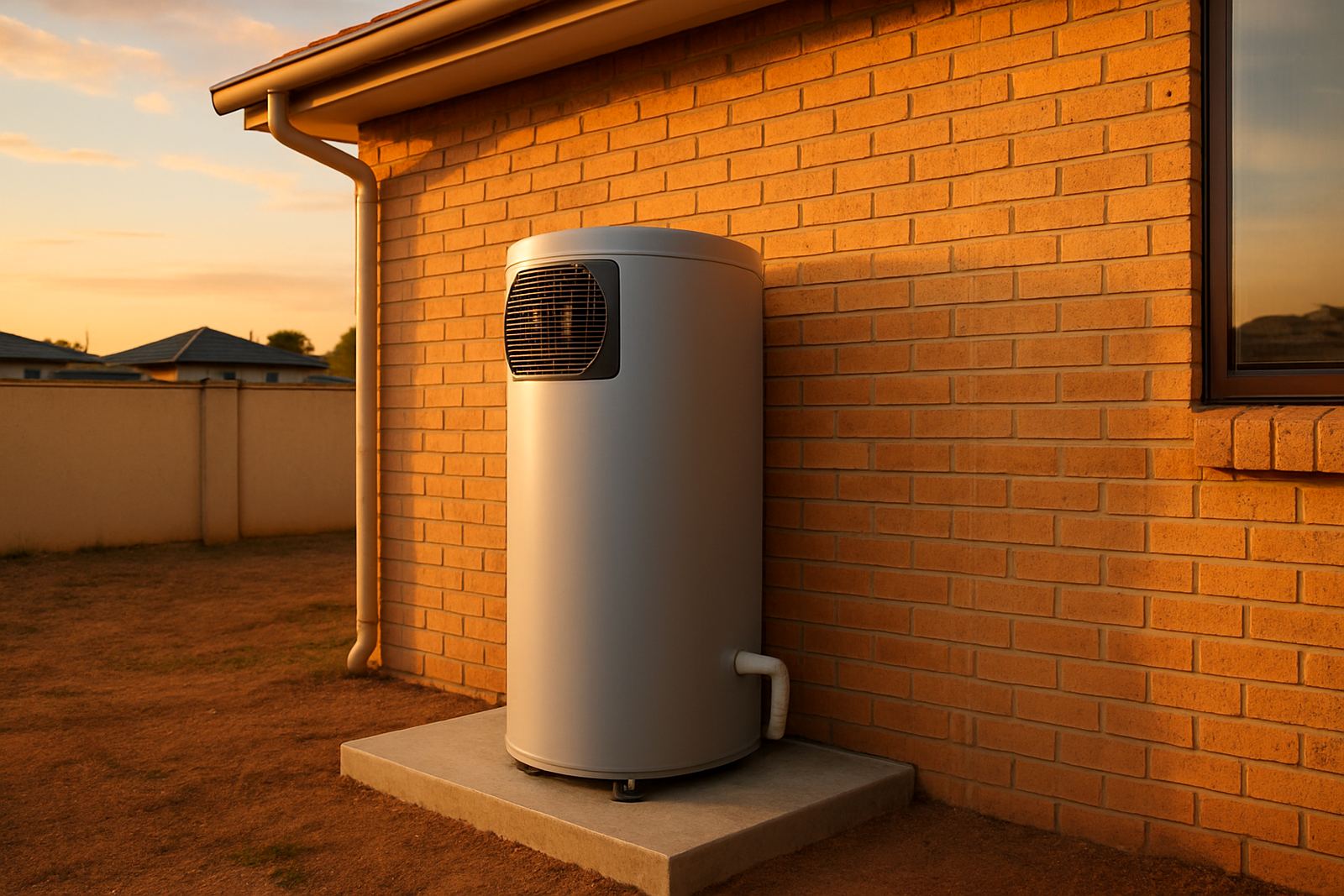
It can also suit apartments, cluster homes and staff accommodation where plant space is limited. On some properties in Sandton, Randburg and Midrand the installation point ends up being a small outside wall, a paved yard or a service area next to the geyser line. The unit needs enough ventilation around it to work properly, so a cramped enclosed space is not ideal.
- 1 to 3 people in a household with light to moderate hot water use
- One bathroom with one shower at a time
- Small offices, washrooms or caretaker units
- Homes where electricity saving matters more than fast high volume recovery
Sizes, options and what changes between units
At this size you will usually see domestic heat pumps with a separate storage tank, and the exact build depends on the installation point and daily demand. Some systems are supplied as a compact all in one unit, while others use a split arrangement with the compressor section mounted outside and the tank installed nearby. The best option depends on roof access, available wall space and how close the pipe runs can be kept.
When comparing options, look beyond the litre rating alone. Compressor output, recovery rate, water temperature settings and the quality of insulation all matter. A well insulated 150L tank can hold usable hot water through the morning and still be ready again before the evening peak. In coastal humidity or where the unit is exposed to winter cold, the choice of casing and corrosion protection also makes a difference.
- Storage volume: 150 litres
- Typical family fit: smaller household or light demand property
- Mounting: outdoor or service area installation with clear airflow
- Water temperature: commonly adjustable to suit daily use
Installation, power supply and site needs
A heat pump needs a proper installation if it is going to save power and keep water temperatures steady. The water connections must be tied into the existing hot and cold lines with correct pressure control, isolation valves and safe discharge routing. The electrical supply also has to be sized correctly, with a dedicated circuit and suitable protection at the board. On many Gauteng homes that means checking the distribution board before any work starts, especially where older geyser wiring is still in place.
Unlike a gas appliance, this product does not need bottled gas or a gas line. It does need open air flow so the unit can pull in and discharge air effectively. For best results, avoid small enclosed courtyards, tight cupboards and spots where dust build up is severe. If the site has frequent power interruptions, it is worth planning around usage patterns so the unit reheats before peak shower times. In load-shedding areas, a backup solution can be discussed if the household cannot wait for recovery after an outage.
Our supply-and-fit team works across Johannesburg North, Sandton, Randburg, Midrand, the East Rand and the West Rand. Where needed, we also check the geyser tray, overflow route and wall support before proceeding, because a poor base can lead to noise, vibration or water damage later on.
Running costs, servicing and long term care
A heat pump is still a water heater, so it needs regular attention if you want stable performance. The main things to keep clean are the air intake area, the filters if fitted, and the space around the unit. Dust, lint and garden debris can reduce airflow and make the system work harder. In Johannesburg North and other urban areas, a dusty yard or garage-side installation can affect performance faster than owners expect.
Routine servicing should also include a check on refrigerant performance, electrical terminals, safety valves and water pressure. The tank should be inspected for signs of corrosion, scale or leaks. If the water quality is hard, some scaling on the heating surfaces can reduce efficiency over time. That is why a maintenance plan makes sense for households that want fewer surprises and cleaner operating conditions.
- Clean air passages and external surfaces regularly
- Check the drip tray and discharge line for blockages
- Book periodic inspection of valves, sensors and wiring
- Watch for unusual noise, longer heat-up times or warm water shortages
What to check before you order
Before you order a 150L heat pump, confirm how much hot water the property uses in the busiest hour. A home that uses two showers, a basin wash and a kitchen sink in a short window may need a larger tank or a different recovery rate. Also check where the unit will stand, whether there is enough clearance around it, and whether the current electrical supply can support the installation without upgrades.
It helps to note the type of property as well. A simple home in Randburg will not be set up the same way as a small office in Sandton or a rented unit in Midrand. Ask about pipe lengths, noise position, drainage and whether the existing geyser can be replaced in the same place or moved to a better point. If the installation is for a coastal property or a humid area, say so up front, because the right protection and mounting choice matters. A few minutes of checking now saves a lot of trouble later.
- How many people use hot water every day?
- Is there enough ventilation around the unit?
- What electrical supply is available at the geyser point?
- Will the existing plumbing need rework or new valves?
Key facts
| Product type | Domestic hot water heat pump |
|---|---|
| Tank size | 150 litres |
| Typical use | Smaller households, flats and light daily demand |
| Installation | Supply and fit with plumbing and electrical connection |
| Power requirement | Dedicated electrical supply, no gas needed |
| Service area | Johannesburg North, Sandton, Randburg, Midrand, East Rand and West Rand |