How a 20L water generator works in a Gauteng home
A 20L water generator, also called an atmospheric water generator, pulls moisture from the air and turns it into drinking water through cooling, condensation and internal filtration. In simple terms, it works a bit like a dehumidifier with a water treatment process built in. The unit draws in air, condenses the moisture, then treats the water before it reaches the tap or storage tank.
This size is suited to households that want a steady daily supply without relying on large drums or constant deliveries. In Johannesburg and the surrounding suburbs, humidity changes through the seasons, so output will vary from day to day. A good-sized home unit can still cover drinking water, kettle use and light cooking for a family, provided it is installed in the right place and maintained properly.
The 20L rating refers to daily production under favourable conditions, not a fixed guarantee. Warm, humid days give better output than cold dry weather. That is why site selection matters so much, especially in winter or in air-conditioned rooms where the air can be drier.
Where the unit suits best, and where it does not
This product suits homes, small offices, guest houses and staff accommodation where people need a practical water source and want to reduce dependence on bottled water. It is especially useful in urban areas where space is limited and the unit has to fit into a kitchen nook, scullery, utility room or enclosed service area.
It is not the right choice for every property. If the room air is very dry, badly ventilated or constantly cooled to low temperatures, output can drop quite a bit. Coastal humidity helps, but even inland homes can make good use of the unit if there is steady air movement and a reasonably warm indoor environment.
- Best for families needing drinking water every day
- Suitable for small offices, reception areas and back-of-house use
- Works well in homes with limited storage for bottled water
- Good option where water security is a concern during outages or municipal interruptions
- Less suitable for very cold spaces, sealed plant rooms or dusty workshops
For larger households, a second unit or a higher-capacity model may make more sense. We can advise on the right size once we know how many people will use it and how much water they want each day.
Installation, placement and power needs
These units normally need a standard electrical connection and enough space around them for airflow and access. They should be placed on a level surface, away from direct sunlight, cooking heat and heavy dust. A small drain point is useful if the system includes a waste water discharge or overflow line.
For homes in Gauteng, especially around Sandton, Randburg, Midrand and the East Rand, we often find that the best results come from installing the unit in a laundry, scullery or covered utility area where the air is warmer and circulation is good. In load-shedding areas, consider backup power if you want daily production to stay steady. The unit itself does not need gas, but it does depend on electricity and should be matched to the available supply. If the power quality is unstable, surge protection is worth adding.
- Allow clear space for airflow on all sides
- Keep the unit away from dust and cooking grease
- Check plug point rating and cable route before installation
- Add surge protection if the home has frequent outages
- Plan for overflow or waste water drainage where needed
Our installation team can inspect the site before fitting and advise if a simple relocation of the unit is better than forcing it into a poor position.
Water quality, storage and daily use
The water made by the unit is intended for drinking and general domestic use, but it should still be treated as a product that needs proper handling. Storage matters. If the internal tank is not cleaned and the outlet is not kept hygienic, water quality can be affected over time. That is why the care routine is as important as the machine itself.
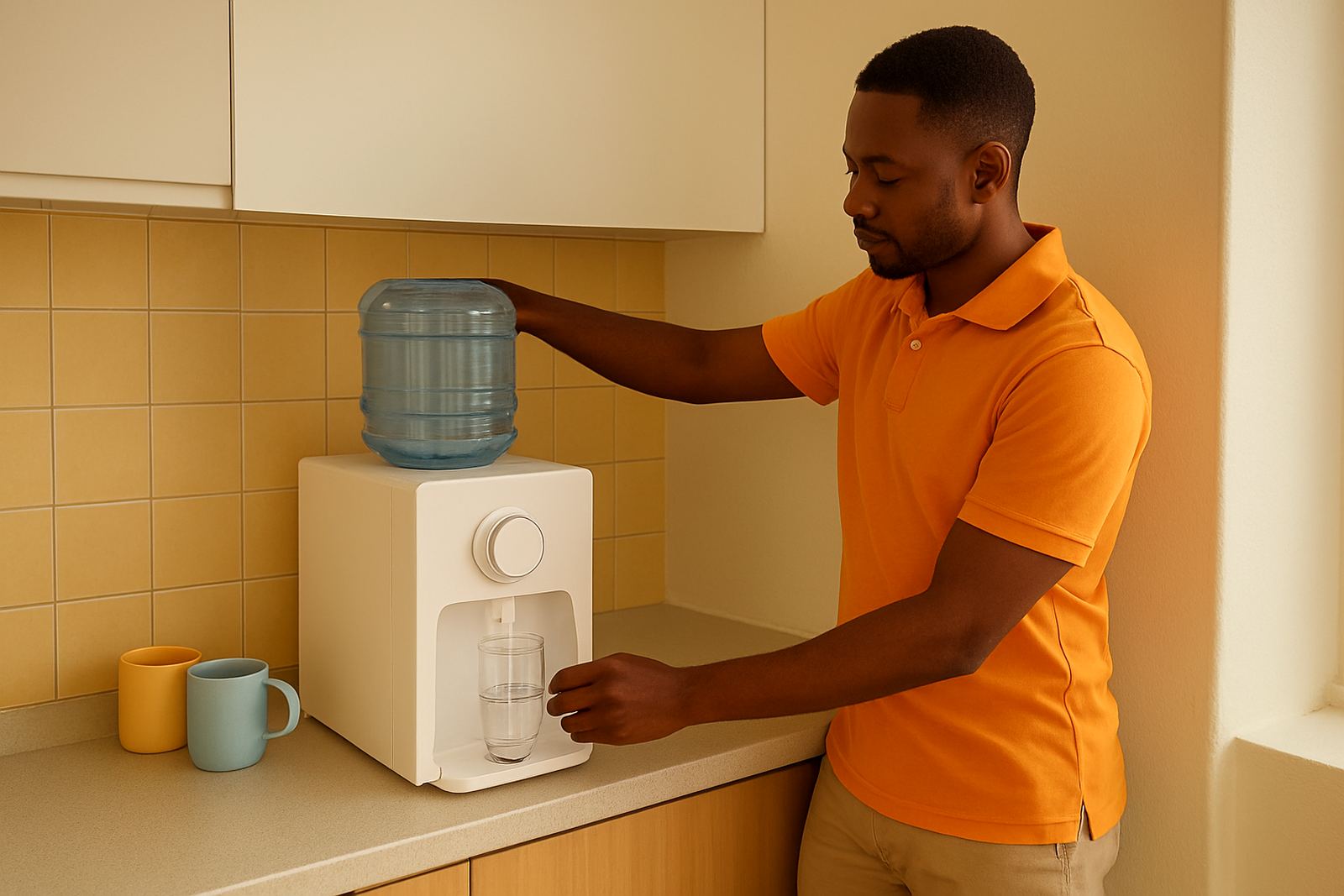
In a home setting, the most practical setup is one that feeds a small internal tank and dispenses water as needed. Some models also allow transfer to an external container. We recommend using clean, food-safe containers and keeping them covered. If the household includes children, older people or anyone with a sensitive stomach, regular maintenance becomes even more important.
Keep in mind that this is not a borehole or municipal filtration system. It creates water from humidity in the air, so the amount produced depends on the room conditions. On dry days, a 20L unit may produce less and that is normal. If you need a fixed high volume every day, a different solution may be more suitable.
Sizes, options and what a 20L unit includes
People often ask whether a 20L model is enough or if they should move up to a larger machine. The answer depends on daily use. For a couple or a small family, 20L per day can be practical. For a busy office or large household, it may be too little unless it is only being used for drinking water.
Options vary, but a typical home unit may include internal filtration, a storage tank, water level control, and indicators for service or filter changes. Some models are freestanding and some are compact enough for enclosed utility areas. The finish, tank size and display layout can differ, but the main thing is whether the unit suits your water demand and the conditions in your home.
- Compact home models for light daily use
- Units with larger internal storage for fewer refill cycles
- Models with filtration stages for drinking water use
- Units designed for indoor installation only
- Optional service plans for filter checks and cleaning
When comparing options, do not only look at litres per day. Check the actual power draw, service access, tank size and how easy it is to clean. A unit that is hard to maintain usually causes problems later on.
Care, servicing and what to check before ordering
Like any water appliance, an atmospheric water generator needs regular care. Filters must be checked, the water path cleaned and the condenser area kept free of dust. If the unit sits in a room with pets, building dust or a lot of foot traffic, servicing may be needed more often. A neglected machine can lose output and water quality, which defeats the purpose.
Before ordering, check the following: available floor space, plug point access, ventilation, expected daily water use, and whether you have backup power during outages. Also check if the room is warm enough, because cold indoor air can reduce daily production. If you are on the West Rand or in older homes with variable electrical supply, it is worth checking the circuit before we install.
- Daily litres needed by the household or office
- Indoor temperature and average humidity
- Available space for airflow and servicing
- Power supply, plug point and backup options
- Drainage or overflow arrangement
- Cleaning and filter replacement schedule
Airconditioning Superstore assists with supply, fitment and ongoing support in Johannesburg North, Sandton, Randburg, Midrand, the East Rand and the West Rand. If you need help choosing the right unit for your home or office, we can size it properly instead of guessing.
Key facts
| Product type | Home atmospheric water generator |
|---|---|
| Daily output | Up to 20L per day under suitable humidity and temperature |
| Power requirement | Electric supply only, backup power recommended during load-shedding |
| Water source | Moisture extracted from ambient air |
| Best use | Drinking water for homes and small offices |
| Installation | Indoor placement with airflow, access and service space |